As an Amazon Associate, we earn from qualifying purchases. This post contains affiliate links.
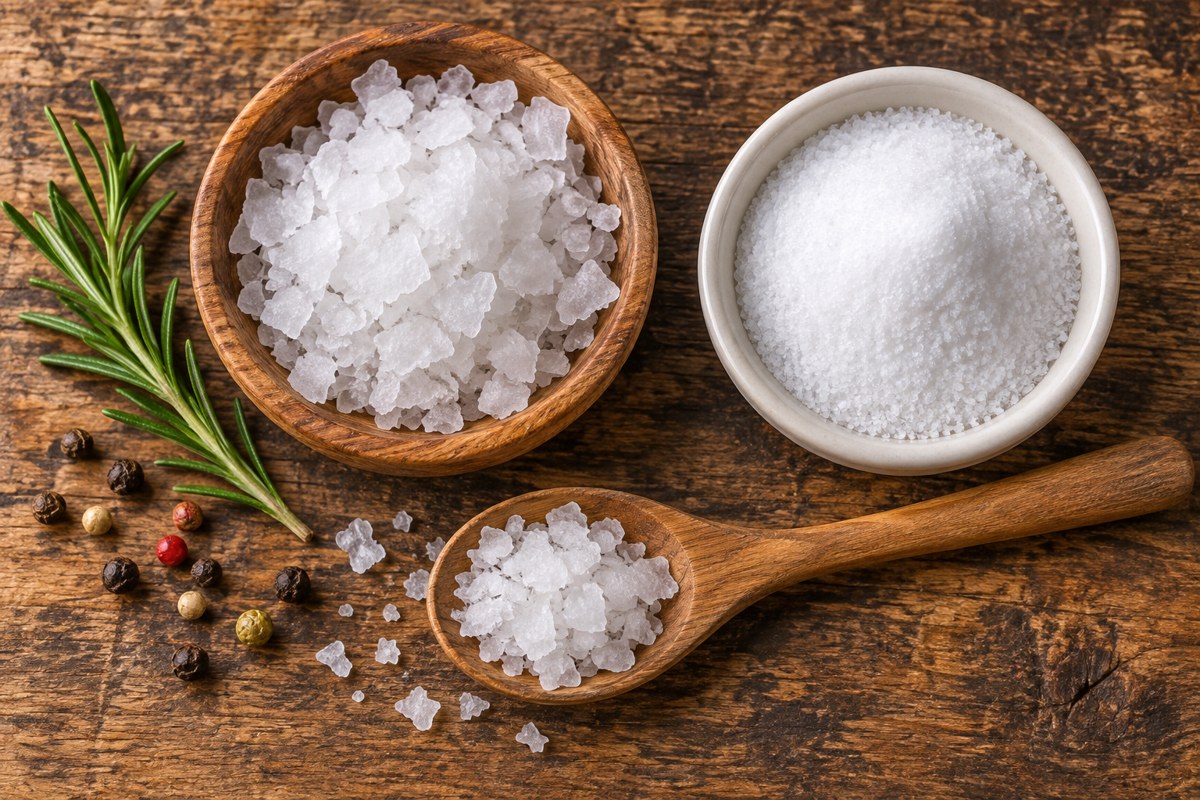
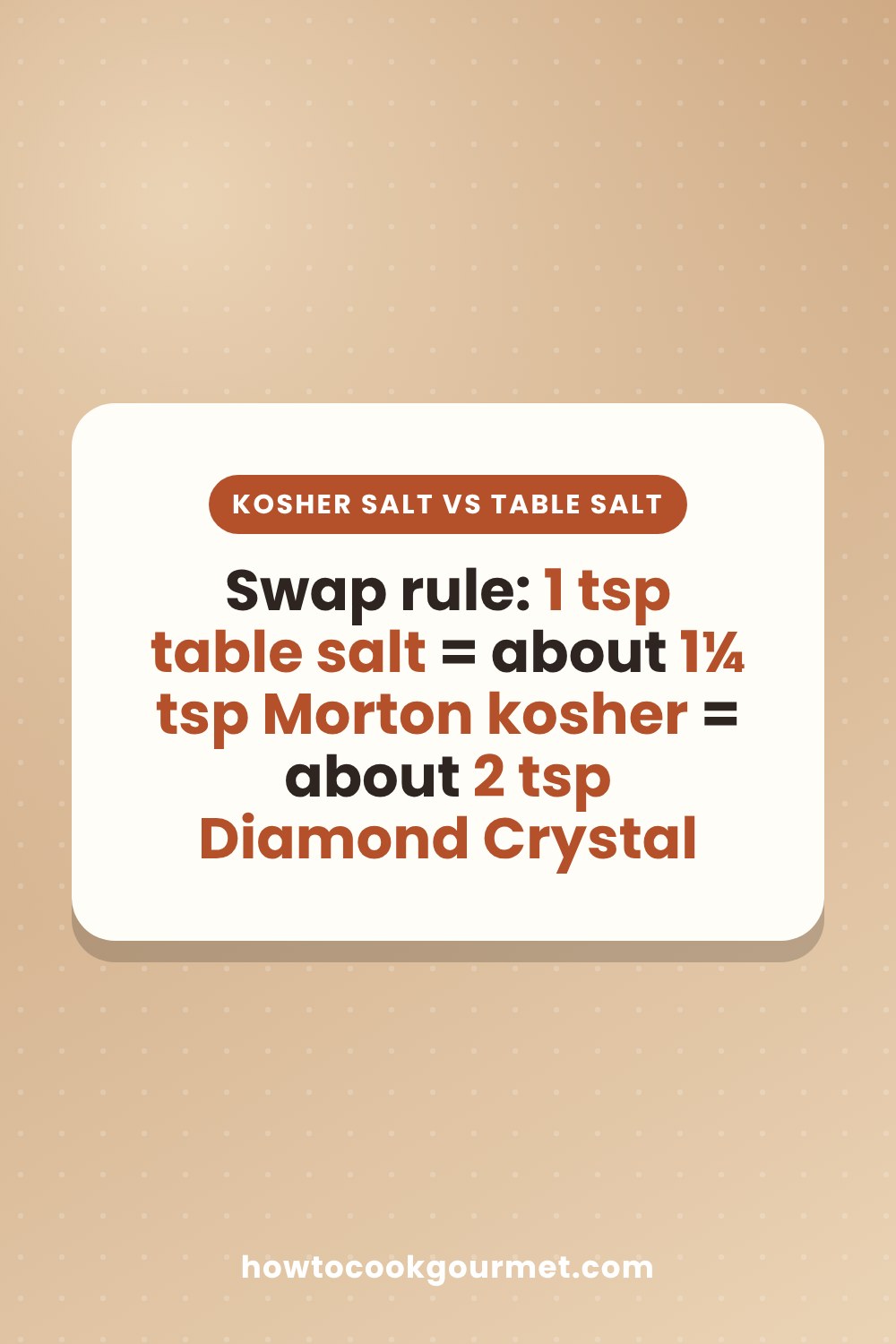
Quick answer: Chemically, yes: both are sodium chloride. The difference is crystal size. Kosher salt has large, coarse flakes, so a teaspoon of it holds noticeably less salt than a teaspoon of fine table salt. Swap them 1:1 by weight, or by volume use roughly 1¼ teaspoons Morton kosher or 2 teaspoons Diamond Crystal for every teaspoon of table salt.
Recipes from restaurant chefs and food magazines usually call for kosher salt, while older family recipes and most baking recipes assume plain table salt. If you have only one box in the pantry, it is easy to wonder whether the choice really matters. It does, but only because of how the crystals pack into a measuring spoon.
Below you will find how the two compare on texture, flavor and saltiness, exact conversions by brand, and when each one works best. Salt is also the heart of any brine, so if you are planning a holiday roast or turkey, our guide to wet vs dry brining pairs well with this one.
Kosher Salt vs Table Salt at a Glance
| Kosher Salt | Table Salt | |
|---|---|---|
| What it is | Coarse sodium chloride crystals or flakes, named for its use in koshering meat | Finely ground sodium chloride, usually with added iodine and an anti-caking agent |
| Crystal shape | Large, irregular flakes or coarse grains that are easy to pinch | Tiny, dense cubes that pour easily from a shaker |
| Flavor | Clean and pure; often described as milder because it dissolves more gradually on food | Sharper and saltier per pinch; some people notice a faint taste from iodine |
| Saltiness per teaspoon | Less salt per spoonful because the crystals trap more air; varies a lot by brand | The most salt per spoonful of any common salt |
| Best uses | Seasoning meat, brines, pasta water, cooking by feel | Baking, salt shakers, recipes written for it |
| Iodine | Usually none | Usually iodized, unless labeled plain or non-iodized |
| Cost | Inexpensive, though usually a bit more per pound | Very inexpensive |
| Substitute ratio | 1¼ tsp Morton or about 2 tsp Diamond Crystal for 1 tsp table salt | About ¾ tsp for 1 tsp Morton kosher, ½ tsp for 1 tsp Diamond Crystal |
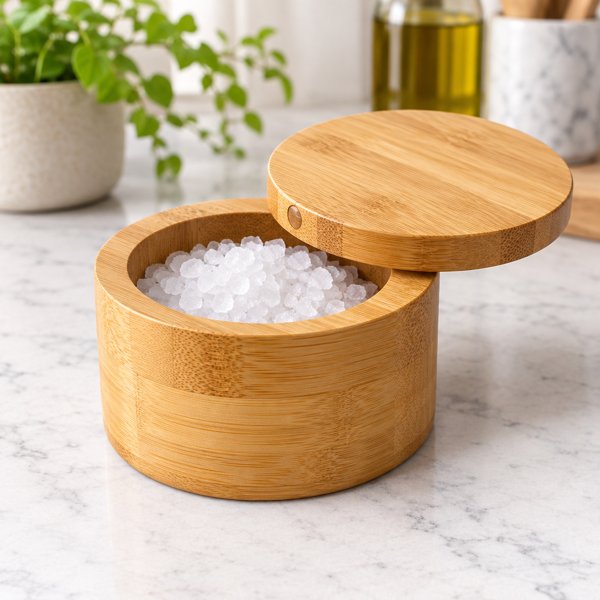
Totally Bamboo Little Dipper Salt Cellar
If you switch to kosher salt for everyday cooking, an open salt cellar by the stove makes those easy pinches part of your routine.
What Is Kosher Salt?
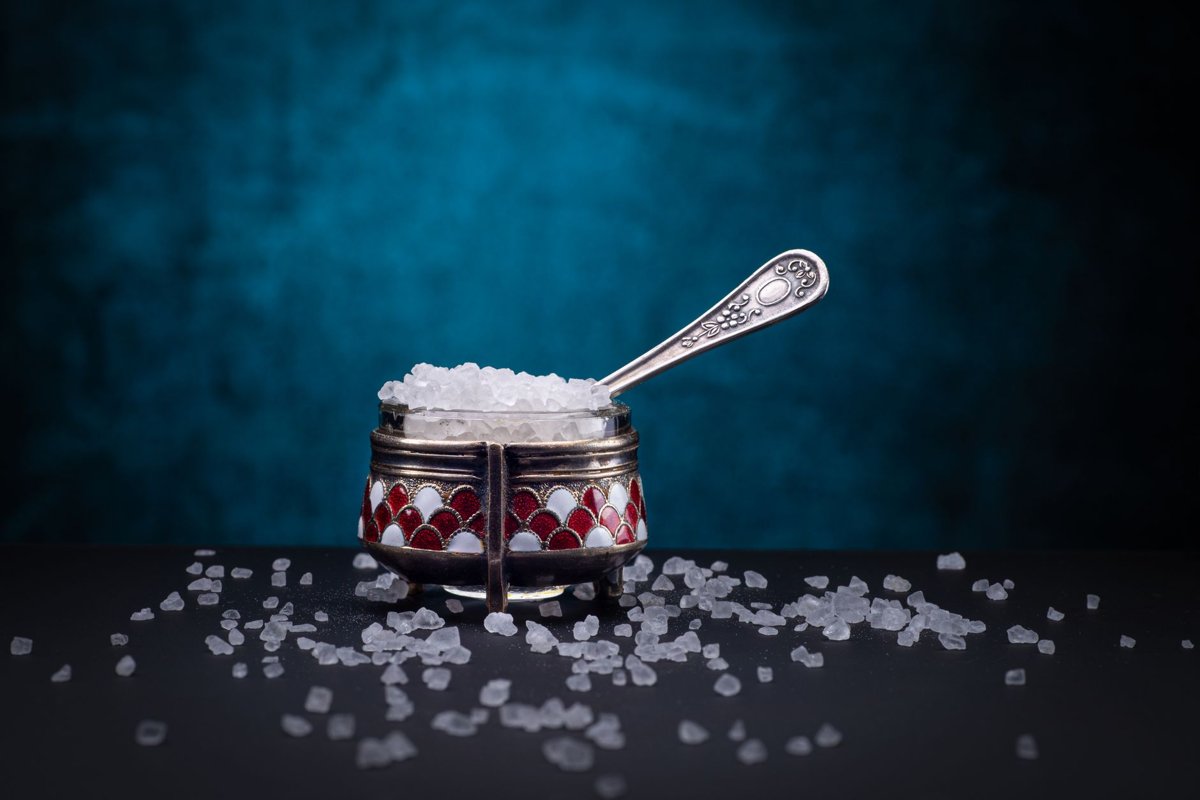
Kosher salt is coarse-grained salt made of sodium chloride, just like table salt. The name comes from its traditional use in koshering meat, where large crystals are spread over the surface to draw out moisture. The salt itself is not necessarily certified kosher, although many brands are.
Its big appeal for cooks is texture. The large flakes are easy to grab between your fingers and see on the surface of food, which makes it simple to season evenly by hand. That is why professional kitchens keep a tub of it by the stove, often in an open container like a bamboo salt cellar for quick pinching.
The catch is that kosher salt brands are not interchangeable. The two big names in the U.S. are made differently. Diamond Crystal uses an evaporation process that forms light, hollow flakes, while Morton kosher salt is rolled into denser, flatter crystals. A teaspoon of Diamond Crystal weighs roughly 3 grams, while a teaspoon of Morton weighs closer to 5 grams. Many recipe writers name the brand for exactly this reason. Most kosher salt contains no iodine; Morton adds a small amount of anti-caking agent, while Diamond Crystal contains only salt.

What Is Table Salt?
Table salt is sodium chloride ground into small, uniform cubes. It is usually iodized, meaning a small amount of iodine has been added, and it typically contains an anti-caking agent so it flows freely from a shaker even in humid weather.
Because the grains are so fine and dense, they pack tightly into a measuring spoon. A teaspoon of table salt weighs about 6 grams, roughly twice as much as a teaspoon of Diamond Crystal. That density makes table salt efficient but unforgiving: an extra pinch adds more saltiness than the same pinch of kosher salt would.
Table salt really shines in baking. The fine grains dissolve quickly and spread evenly through doughs and batters, which matters in cookies and cakes that are mixed briefly. Many classic baking recipes, including many cookie and cake recipes, were written with table salt in mind.
Can You Substitute Kosher Salt for Table Salt?
- Yes, and by weight it is a straight 1:1 swap. Ten grams of salt is ten grams of salt. Weighing on a digital kitchen scale removes all the guesswork.
- Replacing 1 teaspoon of table salt: use about 1¼ teaspoons of Morton kosher salt or about 2 teaspoons of Diamond Crystal.
- Replacing 1 teaspoon of kosher salt: use about ¾ teaspoon of table salt if the recipe was written for Morton, or about ½ teaspoon if it was written for Diamond Crystal.
- If the recipe does not name a brand, start on the low side, then taste and adjust. You can always add salt; you cannot take it out.
- For brines, follow the salt type the recipe specifies or measure by weight. A brine made with table salt at a kosher salt volume can be roughly twice as salty as intended. Our classic guide to brining a turkey walks through the basics.
- For baking, kosher salt works if you adjust the amount, though very coarse flakes may not fully dissolve in quick-mixed batters. Crush the flakes between your fingers or use table salt.
- For quick reference, our cooking equivalent measurements table helps when you are converting other ingredients in the same recipe.
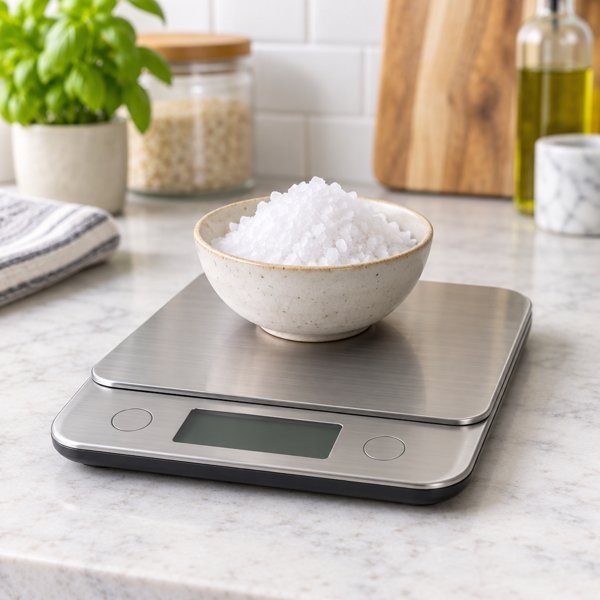
Escali Primo Digital Kitchen Scale
Since salt swaps perfectly by weight, a small kitchen scale turns every conversion above into a simple 1:1.
When to Use Each
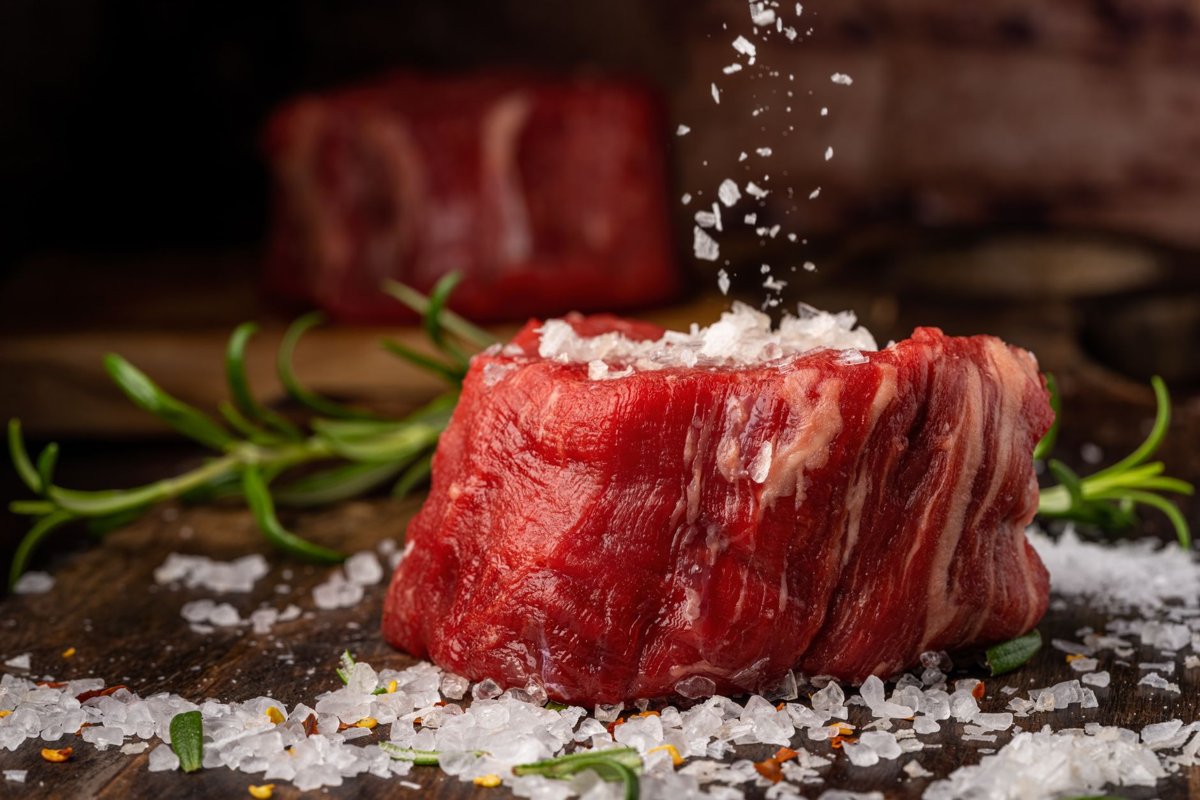
- Seasoning meat before cooking: kosher salt. The large crystals are easy to scatter evenly over steaks, chops and roasts, and you can see where you have already salted.
- Dry brining and wet brines: kosher salt, measured carefully by brand or by weight. Many cooks keep a box of Diamond Crystal kosher salt just for this.
- Salting pasta water and blanching vegetables: either works, since the salt dissolves completely. Kosher salt is easier to toss in by the handful.
- Baking cookies, cakes and breads: table salt, or kosher salt measured by weight, for even distribution.
- The salt shaker on the table: table salt. Kosher flakes are too large to pour through most shaker holes.
- Pickling: use pickling salt or an additive-free kosher salt such as Diamond Crystal. The iodine and anti-caking agents in table salt can cloud the brine and darken some vegetables.
Our Pantry Picks
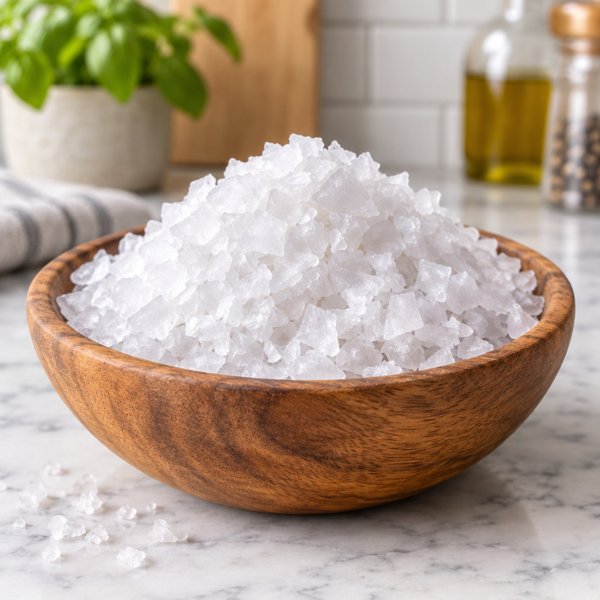
Diamond Crystal Kosher Salt
Light, additive-free flakes that are easy to pinch and forgiving if you over-season a little, which is why so many chefs and recipe developers use it.
Morton Coarse Kosher Salt
Widely available and denser than Diamond Crystal, so use a little less of it by volume when a recipe calls for kosher salt.
Totally Bamboo Little Dipper Salt Cellar
Keeps a few days of salt within reach of the stove so you can season by the pinch instead of shaking from the box.
Escali Primo Digital Kitchen Scale
Measuring salt in grams makes any brand or type interchangeable and takes the guesswork out of brines and baking.
Common Mistakes to Avoid
- Swapping by volume without adjusting. Using a full measure of table salt where a recipe means kosher salt can make a dish almost twice as salty.
- Treating all kosher salts as the same. Diamond Crystal and Morton differ by close to double in weight per teaspoon, so switching brands mid-recipe changes the result.
- Using iodized table salt for pickles. The additives can turn pickling brine cloudy; reach for pickling salt or additive-free kosher salt.
- Shaking salt straight from the box. It is hard to control. Pour some into a small dish or salt cellar and season by the pinch from a height for even coverage.
- Not tasting as you go. Salt brands, broths and cured ingredients all vary, so taste and adjust near the end of cooking instead of relying only on the recipe amount.
- Over-salting a brine to speed it up. Stick to the recipe’s ratio and timing; a stronger brine can make meat too salty and change its texture.
Kosher Salt vs Table Salt FAQ
Are kosher salt and table salt the same?
They are the same compound, sodium chloride, but not the same product. Kosher salt has larger, coarser crystals and usually no iodine, while table salt is finely ground, usually iodized and contains an anti-caking agent. Because of the crystal size, a teaspoon of kosher salt holds less salt than a teaspoon of table salt.
Can I use table salt instead of kosher salt?
Yes, just use less. Replace 1 teaspoon of kosher salt with about ¾ teaspoon of table salt if the recipe was written for Morton, or about ½ teaspoon if it was written for Diamond Crystal. If you weigh your salt, swap them 1:1 by grams.
Does kosher salt have less sodium than table salt?
Gram for gram, no: both are almost entirely sodium chloride. A teaspoon of kosher salt contains less sodium only because it holds less salt by volume. Check the nutrition label on your brand, since sodium per teaspoon varies with crystal size.
How should I store salt, and does it expire?
Keep salt in a covered container in a cool, dry place to stop it from clumping. Plain salt does not spoil. Iodized salt manufacturers often suggest using it within a few years, since the iodine can slowly diminish. A lidded salt cellar works well for the salt you use daily.
The Bottom Line
Kosher salt and table salt are the same seasoning in different shapes. Kosher salt’s big flakes make it easier to season by hand, which is why cooks love it for meat, brines and everyday cooking, while fine table salt dissolves quickly and suits baking and the shaker. The only real trap is measuring by volume: use about 1¼ teaspoons of Morton or 2 teaspoons of Diamond Crystal for each teaspoon of table salt, or weigh it and swap 1:1.
More from the kitchen: