
As an Amazon Associate, we earn from qualifying purchases. This post contains affiliate links.
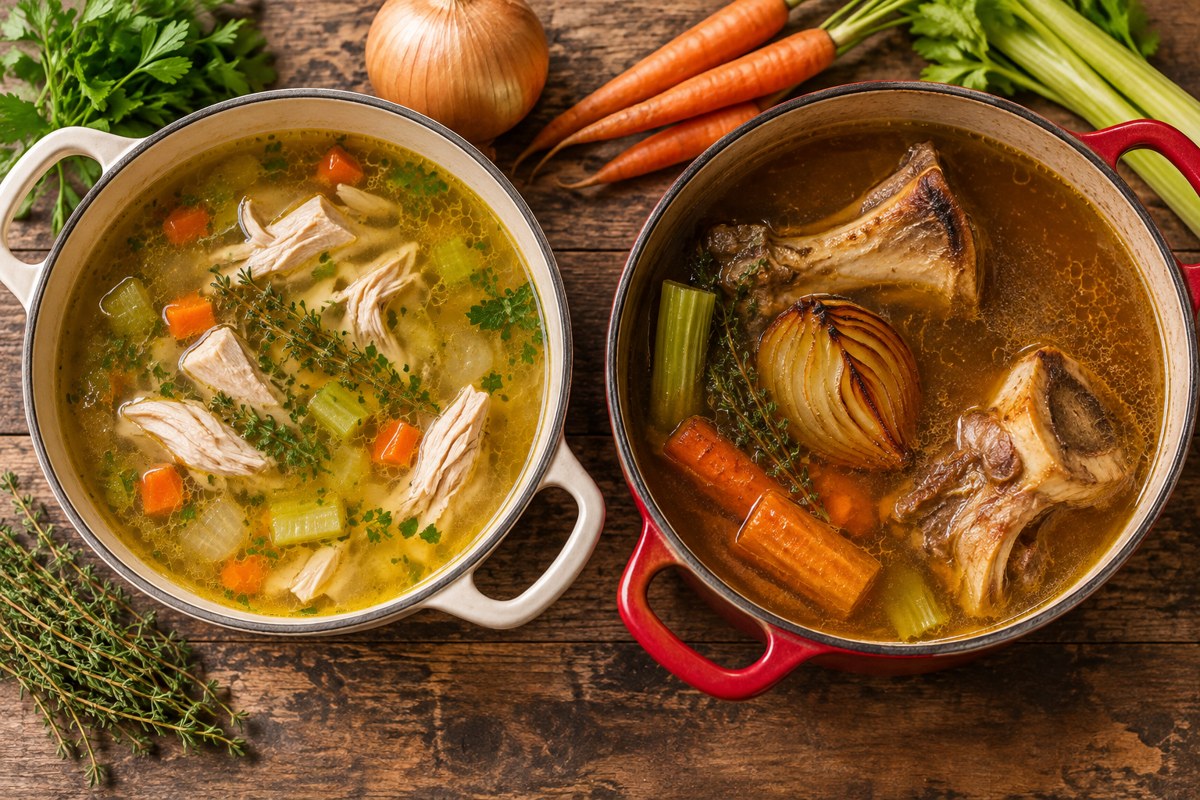
Quick answer: They are close but not the same. Stock is simmered mostly from bones, so it has more body and is usually unsalted, while broth is simmered mostly from meat and is seasoned to sip on its own. In most recipes you can swap them 1:1, as long as you adjust the salt.
Broth and stock sit side by side on grocery shelves, show up in the same recipes and look almost identical in a pot. So it’s no surprise that many cooks use the words interchangeably. There is a real difference, though, and it matters most when you’re making gravy, pan sauces or anything you plan to reduce.
With the holidays coming, a good carton of unsalted chicken stock or a pot of homemade stock is one of the most useful things in your kitchen. Here’s how the two compare, when each one shines, and how to substitute one for the other without ending up with a salty, thin or flat-tasting dish.
Broth vs Stock at a Glance
| Stock | Broth | |
|---|---|---|
| Made from | Mostly bones (often roasted), plus aromatic vegetables | Mostly meat (sometimes with a few bones), plus vegetables and herbs |
| Simmer time | Long: about 3 to 4 hours for chicken, 6 hours or more for beef | Shorter: usually 1 to 2 hours |
| Body | Rich and full, often gels when chilled thanks to gelatin from the bones | Thinner and lighter |
| Seasoning | Usually unsalted, meant as a building block | Seasoned with salt, ready to sip |
| Best uses | Gravy, pan sauces, risotto, braises, anything reduced | Soups, sipping, cooking rice and grains, quick dishes |
| Store-bought tip | Look for unsalted or low-sodium cartons | Check the label, sodium varies widely by brand |
| Substitute ratio | 1:1 for broth, then add salt to taste | 1:1 for stock, then cut back on added salt |

Kitchen Basics Unsalted Chicken Stock
For home cooks who want a dependable base for soups, gravies, pan sauces and risotto, this unsalted chicken stock helps you build flavor without starting with extra salt. It fits the article’s guidance on swapping stock for broth, giving you a fuller, more flexible foundation you can season to taste.
- Unsalted for easy seasoning control
- Adds body to reduced dishes
- Useful in soups, sauces, risotto
What Is Stock?
Stock is a flavorful liquid made by gently simmering bones with aromatic vegetables, classically onion, carrot and celery, along with herbs like parsley stems, thyme and bay leaf. Over several hours, the connective tissue in the bones breaks down into gelatin. That gelatin is what gives stock its silky body and why good homemade stock turns jiggly in the fridge.
Chefs usually leave stock unsalted on purpose. It’s an ingredient, not a finished dish, and it often gets reduced. Salt doesn’t cook off, so a liquid that tastes fine at the start can become far too salty once it’s simmered down by half. Roasting the bones first gives you a darker brown stock with deeper flavor, while unroasted bones make a lighter white stock. For a deeper look at the classic method, see our guide to cooking stocks.

What Is Broth?
Broth is made by simmering meat, sometimes with a few bones, along with vegetables and herbs. Because meat gives up its flavor faster than bones give up their collagen, broth cooks in a shorter time, usually an hour or two. The result is lighter in body and doesn’t gel much when chilled.
The other big difference is seasoning. Broth is salted so it tastes good on its own, which is why it’s the base for a simple bowl of soup or something warm to sip. Vegetable broth follows the same idea with no meat at all. And despite the name, popular bone broth is really a long-simmered stock that has been seasoned, so it sits somewhere between the two.


Can You Substitute Broth for Stock?
- Yes, 1:1 in most recipes. Soups, stews, braises, rice and grains all work with either. The swap is about the salt and body, not the volume.
- Using broth instead of stock: hold back on any salt the recipe calls for, then taste and season at the end. If the recipe reduces the liquid, choose a low-sodium broth or dilute regular broth with a little water.
- Using stock instead of broth: expect a richer but blander result. Add salt gradually and taste as you go, since unsalted stock needs more seasoning than you might think.
- Short on either? A concentrated base like Better Than Bouillon mixed with water per the jar directions (typically about 1 teaspoon per cup) works in a pinch. Most bases are salty, so season the dish lightly.
- Need more body? Whisking a little unflavored gelatin into warm broth before using it can mimic some of the richness of stock in sauces.
- Water as a last resort: water works in a hearty soup or stew with lots of other flavor, but you’ll want to add extra aromatics, herbs and salt.

Better Than Bouillon Roasted Chicken Base
For home cooks who want an easy stand-in for stock or broth, this roasted chicken base helps you mix up just what a recipe needs. Keep it in the fridge so you can add savory chicken flavor to soups, sauces, rice, and pan juices without opening a whole carton.
- Makes quick stock anytime
- Easy to dilute for recipes
- Handy for soups and sauces
When to Use Each
- Gravy and pan sauces: use stock, ideally unsalted. Its gelatin gives gravy a glossy, clingy texture, and you control the salt as it reduces. It’s the go-to for the turkey gravy on your holiday table.
- Risotto and reductions: use stock. Risotto takes in a lot of liquid and you can easily oversalt it with seasoned broth.
- Braises and stews: either works. Stock adds richness, broth adds seasoning; adjust salt at the end.
- Quick soups: broth is the easy choice, since it’s already seasoned and flavorful.
- Cooking rice, quinoa or couscous: broth adds flavor without extra seasoning steps. Use a low-sodium version if you plan to season the grains yourself.
- Sipping on its own: broth, or a seasoned bone broth, is made for this.

What You’ll Need

Cuisinart Chef's Classic 12-Quart Stockpot
For home cooks making broth, stock, or big holiday pots of soup, this roomy stockpot gives you the space to simmer ingredients gently without crowding. It helps you make a fuller, cleaner-tasting base for gravy, sauces, and everyday cooking with less fuss at the stove.
- Room for large batches
- Gentle simmer, less boil-over
- Great for soups and stock
OXO Good Grips 8-Inch Double Rod Strainer
Its fine mesh catches small bits of bone and herbs, and the rods let it rest securely over a bowl while you pour.
Kitchen Basics Unsalted Chicken Stock
A reliable unsalted carton stock for gravy, risotto and sauces when you don’t have homemade on hand.
Better Than Bouillon Roasted Chicken Base
A spoonable concentrate that keeps for months in the fridge, handy for quick soups or topping up a recipe that runs short.
Common Mistakes to Avoid
- Salting stock while it simmers. Season the finished dish instead, so reductions don’t turn too salty.
- Letting stock boil hard. A rolling boil emulsifies fat into the liquid and makes it cloudy and greasy. Keep it at a lazy simmer and skim off foam as it rises.
- Reducing regular store-bought broth for a sauce. Concentrating an already seasoned liquid can make a pan sauce or gravy far too salty. Reach for unsalted stock, and strain homemade stock through a fine-mesh strainer for the smoothest sauce.
- Using a pot that’s too small. Bones need to be covered by water by an inch or two. A roomy 12-quart stockpot makes this much easier, and our comparison of a soup pot vs a stock pot explains why tall pots work best.
- Cooling a big pot of stock on the counter. Per USDA guidance, refrigerate it within 2 hours. Divide it into shallow containers so it cools quickly.
- Assuming every carton is the same. Labels and sodium levels vary a lot between brands, so read the nutrition panel and taste before seasoning.

Broth Vs Stock FAQ
Are broth and stock the same thing?
Not quite. Stock is simmered mostly from bones for body and is usually unsalted, while broth is simmered mostly from meat and seasoned to taste good on its own. In everyday cooking they can usually be swapped 1:1.
Can I use chicken broth instead of chicken stock in gravy?
Yes, but choose a low-sodium broth and hold back on salt until the end, because gravy reduces and concentrates the salt. Unsalted chicken stock is the easier choice for gravy since it gives you more control.
Is stock or broth higher in protein?
Homemade stock often has a bit more protein because of the gelatin released from the bones, while broth is usually higher in sodium. Store-bought versions vary widely, so the nutrition label is the best guide.
How long does homemade stock or broth keep?
Refrigerate it within 2 hours of cooking and use it within 3 to 4 days, per USDA guidance. For longer storage, freeze it in portions for 2 to 3 months for best quality, and bring it to a boil before using leftovers.
The Bottom Line
Stock and broth are close cousins, not twins. Stock is the rich, unsalted building block for gravy, sauces and risotto, while broth is lighter, seasoned and ready for soups and sipping. Keep both in mind, swap them 1:1 when you need to, and always taste for salt before you serve.
More from the kitchen: