
Decoding Your Oven’s Heat Mechanisms
When deciding between baking and broiling, it’s essential to grasp how each function delivers heat to your food. Baking involves an enveloping heat that circulates gently around your dish, allowing for steady, thorough cooking. This method encourages flavors to meld and results in tender, uniformly cooked meals.
Broiling, in contrast, harnesses intense, direct radiant heat from the oven’s top element. It delivers a fast, high-temperature burst that quickly crisps and caramelizes the surface of your food. Think of it like giving your meal a rapid, fiery torch treatment-ideal for creating seared exteriors and golden crusts in a matter of minutes.
- Baking: Evenly distributed surrounding heat
- Broiling: Direct, concentrated heat from above
- Time frame: Baking is slower and gentler; broiling is fast and intense
Choosing Between Baking and Broiling: When and Why
The best choice largely depends on the cooking outcome you desire. If you want soft, moist interiors-like in cakes, breads, or casseroles-baking is the reliable go-to.
However, if your goal is to achieve a browned, crispy surface-say, for finishing melted cheese or quickly cooking thin fish fillets-broiling provides a high-heat solution that resembles grilling, but from your oven’s top element.
For instance, roasting vegetables under the broiler for 5 to 7 minutes can add a delightful char and smoky edge without over-drying.
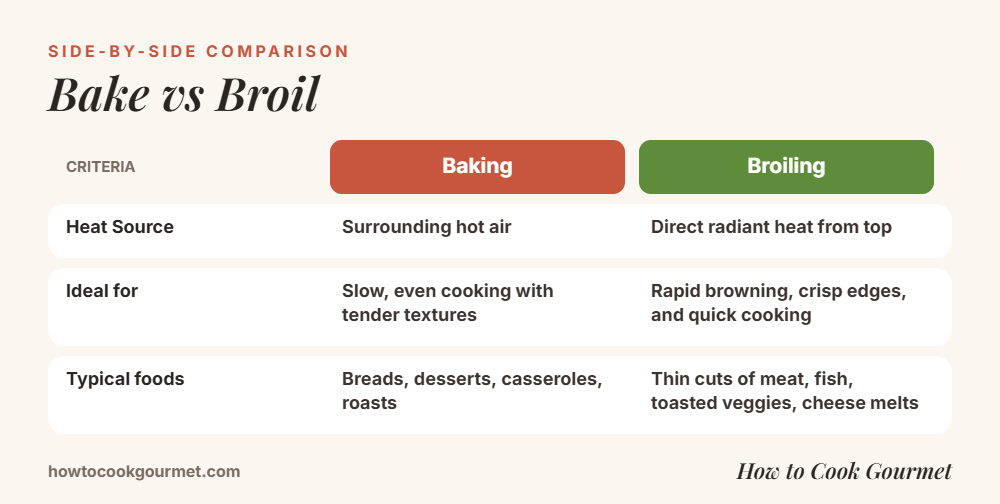
| Criteria | Baking | Broiling |
|---|---|---|
| Heat Source | Surrounding hot air | Direct radiant heat from top |
| Ideal for | Slow, even cooking with tender textures | Rapid browning, crisp edges, and quick cooking |
| Typical foods | Breads, desserts, casseroles, roasts | Thin cuts of meat, fish, toasted veggies, cheese melts |
Practical Tips for Using Baking and Broiling Settings Successfully
Achieving perfect results with baking or broiling depends heavily on timing and placement in your oven. Broiling requires close attention since the intense heat can quickly go from perfectly charred to burnt.
- Baking: Position your dish on the middle rack to ensure uniform heat distribution.
- Broiling: Place food about 4 to 6 inches below the broiler element. Too close risks burning; too far leads to underwhelming crispness.
- Preheat your oven: Whether baking or broiling, getting the oven to the right temperature beforehand promotes even cooking.
- Select the right thickness: Broil thinner cuts like fish fillets or sliced veggies, and reserve baking for thicker casseroles or roasts requiring longer cook times.
Many modern ovens now feature convection baking, which uses fans to circulate hot air for even more consistent results compared to conventional bake settings. Experimenting with your specific model will help refine cooking times and positions.
Common Pitfalls to Watch Out For
Confusing baking and broiling can lead to common kitchen mishaps, such as burnt exteriors with raw interiors or unevenly cooked dishes.
A frequent error is switching between bake and broil mid-cooking without adjusting rack placement or temperature, which can compromise your meal’s texture and doneness.
Equally important is the distance from the broiler. Too near, and your food might char before it’s cooked through. Too far, and you risk drying out your dish while waiting for browning.
Some additional avoidable mistakes include leaving the oven door open while baking-which lowers the temperature and prolongs cooking-or cracking the door during broiling, which diminishes broiler intensity.
| Aspect | Baking | Broiling |
|---|---|---|
| Temperature | 300-400°F (150-205°C) | 500-550°F (260-288°C) |
| Rack position | Center rack | Top rack, 4-6 inches from heat source |
| Oven door | Closed | Closed |
| Cooking duration | Longer, measured in tens of minutes | Short bursts, minutes only |
Frequently Asked Questions
- What is the fundamental difference between baking and broiling?
- Baking uses consistent, surrounding heat for gradual cooking, while broiling directs intense heat solely from the top for rapid surface searing.
- Which foods benefit the most from baking?
- Baking is perfect for items needing even, full cooking such as breads, cakes, casseroles, and roasted vegetables.
- What are the best candidates for broiling?
- Broiling excels with thin cuts of meat, seafood, and vegetable slices that benefit from quick heating and crispy, caramelized exteriors.
- Is it safe to broil frozen foods?
- While you can broil from frozen, it’s better to thaw first to avoid uneven cooking and burnt surfaces with cold interior centers.
- Are broiled dishes healthier than baked ones?
- Often yes, as broiling allows fats to drip away, reducing grease content. Both methods promote healthy cooking when paired with wholesome ingredients.
- Can I bake and broil simultaneously?
- Most ovens don’t support simultaneous baking and broiling. Instead, bake first and use broiling as a finishing technique to add texture or melting.
- Why does broiling sometimes produce smoke?
- High heat causes fats and juices to burn and smoke. Avoid this by trimming excess fat and using a drip pan, plus cleaning your oven regularly.
- What is the ideal distance between food and broiler?
- Position food about 4 to 6 inches from the broiler element, much like finding the right distance from a campfire to get a perfect roast without burning.
Final Thoughts on Making the Most of Bake and Broil
Mastering the bake and broil functions unlocks a world of culinary possibilities. Baking suits long, gentle cooking for desserts and hearty meals, while broiling enables a swift finish that enhances flavor through crisping and caramelizing.
Next time you preheat your oven, consider your dish’s needs: slow and steady heat to cook thoroughly, or rapid, direct heat to brown beautifully. With these insights, you’ll approach your oven with a confident strategy, turning every meal into a delicious success.
Whether you’re aiming to bake moist chocolate chip cookies or broil perfectly golden cheesy bruschetta, your oven is your versatile partner. Happy cooking!
Keep reading:

Leave a Comment
You must be logged in to post a comment.