
As an Amazon Associate, we earn from qualifying purchases. This guide contains affiliate links.
Quick answer: If you want fast juice from apples, carrots and citrus with little prep, buy a centrifugal juicer. If you juice a lot of leafy greens, want more juice per pound of produce, or like a quieter machine, buy a slow (masticating) juicer. If you mostly want smoothies with all the fiber kept in, you may not need a juicer at all. A good blender does that job.
We first wrote this guide years ago, when juicing was at its peak. A lot has changed since then. Machines are easier to clean, wide chutes mean less chopping, and “hands-free” batch juicers now exist. This updated guide covers how each type works, what actually matters when you shop, and a short list of juicers we would look at today.

The Main Types of Juicers
Centrifugal juicers
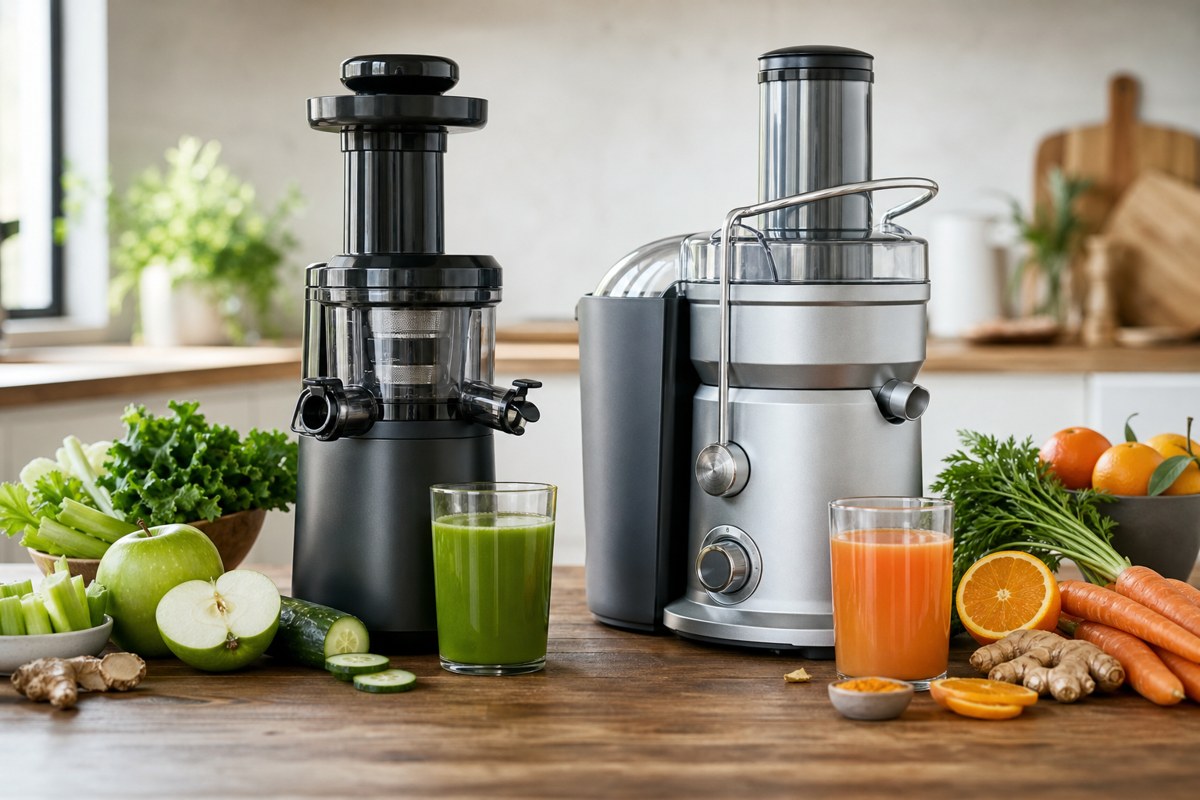
A centrifugal juicer spins a flat cutting disc and a mesh basket at high speed. Produce is shredded and the juice is flung through the mesh, while the pulp is pushed into a bin. They are the fastest type and usually the least expensive.

- Best for: hard fruits and vegetables like apples, carrots, beets, cucumbers and celery
- Good: fast, wide feed chutes, lower price
- Not so good: loud, weaker with leafy greens and wheatgrass, juice separates and foams more and is best drunk right away
Slow (masticating or “cold press”) juicers
A slow juicer uses a turning auger to crush and press produce at a low speed. Most home “cold press” juicers are this type. They come in two styles:

- Vertical: stands upright with a small footprint and is easy to feed. Most models today are vertical.
- Horizontal: lies on its side and is usually the stronger choice for leafy greens and wheatgrass. Many can also make nut butters and sorbets.
- Best for: leafy greens, herbs, wheatgrass, soft fruit and mixed green juices
- Good: quieter, drier pulp (more juice from the same produce), less foam
- Not so good: slower, often smaller chutes on older designs, higher price
Batch or “hands-free” cold press juicers
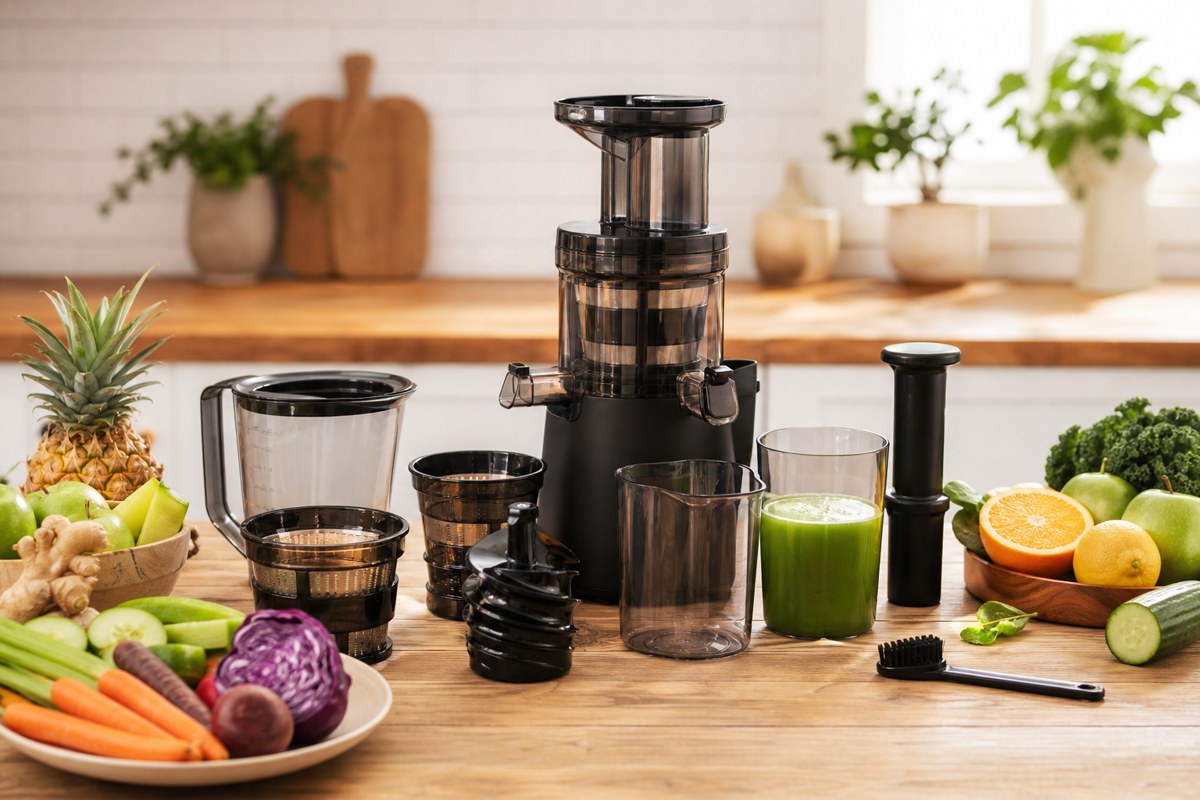
A newer style of slow juicer has a large hopper. You load it with chopped produce, close the lid, and walk away while it works through the batch. They cost more, but they save the most hands-on time.
Citrus juicers
If you only want orange, lemon or grapefruit juice, a simple citrus press or reamer is cheaper, faster and easier to clean than any of the machines above.
Want the details? See our comparisons of a slow juicer vs a cold press juicer and a juice extractor vs a juicer.
Centrifugal vs Slow Juicer at a Glance

What to Look for When You Buy
- Cleanup time. This is the number one reason juicers end up in the cupboard. Count the parts, check whether they are dishwasher safe, and look at how the strainer is cleaned.
- Feed chute size. A wide chute (about 3 inches) lets you drop in whole apples or large chunks. Narrow chutes mean more chopping.
- What you will juice most. Mostly hard fruit and roots? Centrifugal is fine. Lots of kale, spinach or wheatgrass? Go slow.
- Counter space. Vertical slow juicers and compact centrifugal models take up the least room.
- Noise. If you juice early while others sleep, a slow juicer is much quieter.
- Batch size. Juicing for a family or prepping juice for a few days points toward a large jug, a big pulp bin, or a batch-style juicer.
- Warranty. Slow juicers often carry long motor warranties. It is worth comparing before you buy.
Juicers Worth a Look
These are well-established models from brands with a long track record. Check current prices and the latest reviews on Amazon before you buy.
Best all-around centrifugal: Breville Juice Fountain Cold Plus
A fast centrifugal juicer with a wide chute and a large 70 oz jug. Breville designed its “cold spin” system to limit the heat juice picks up on the way out. A good pick if you want quick juice from whole fruit and vegetables for more than one person.
Breville Juice Fountain Cold Plus (BJE530)
- Centrifugal juicer with Breville Cold Spin design
- 70 oz juice jug for big batches
- Wide feed chute for whole fruit
Best budget juicer: Hamilton Beach Big Mouth Juice Extractor
An inexpensive centrifugal juicer with an 800-watt motor and a 3-inch chute. A sensible way to find out whether juicing will stick before you spend more.
Hamilton Beach Big Mouth Juice Extractor (67601A)
- 800-watt centrifugal motor
- 3-inch chute fits whole fruit
- Low price to try juicing
Best vertical slow juicer: Hurom H-AA Slow Juicer
A compact vertical masticating juicer. It handles greens and soft fruit well, runs quietly, and takes up little counter space.
Hurom H-AA Slow Juicer
- Vertical slow (masticating) juicer
- Adjustable pulp control lever
- Small footprint and quiet
Best for leafy greens: Omega J8006HDS
A horizontal slow juicer that runs at 80 RPM. Horizontal designs like this one are a favorite for kale, spinach and wheatgrass, and it can also make nut butters and sorbets.
Omega J8006HDS
- Horizontal slow juicer at 80 RPM
- Strong on kale, spinach and wheatgrass
- Also makes nut butters and sorbets
Best hands-free batch juicer: Nama J2 Cold Press Juicer
A large hopper you load and walk away from. It costs more than the others here, but it is the one to look at if prep and babysitting the machine are what stop you from juicing.
Nama J2 Cold Press Juicer
- Hands-free batch cold press juicer
- Load the hopper and walk away
- Highest price, least hands-on time
Breville Juicers
Breville is best known for centrifugal juicers. Its “Juice Fountain” line ranges from small models for one person to large ones for families:
- Juice Fountain Compact (BJE200XL): a smaller, simpler centrifugal model for small kitchens and one or two people. See the Juice Fountain Compact.
- Juice Fountain Cold Plus (BJE530): the larger model above, with a big jug for juicing in quantity.
- Big Squeeze (BJS700): Breville’s vertical slow juicer, for people who like the brand but want a masticating machine. See the Big Squeeze.
Deciding between brands? Read our Omega vs Breville juicer comparison.
Hurom Juicers
Hurom specializes in vertical slow juicers and helped make the style popular. Its models differ mainly in chute size, strainer design and features. Newer Hurom models are built to need less chopping and easier cleaning than the early ones. The H-AA above is a good, widely available starting point.
Comparing the two big slow-juicer brands? See Hurom vs Omega.
Do You Need a Juicer or a Blender?
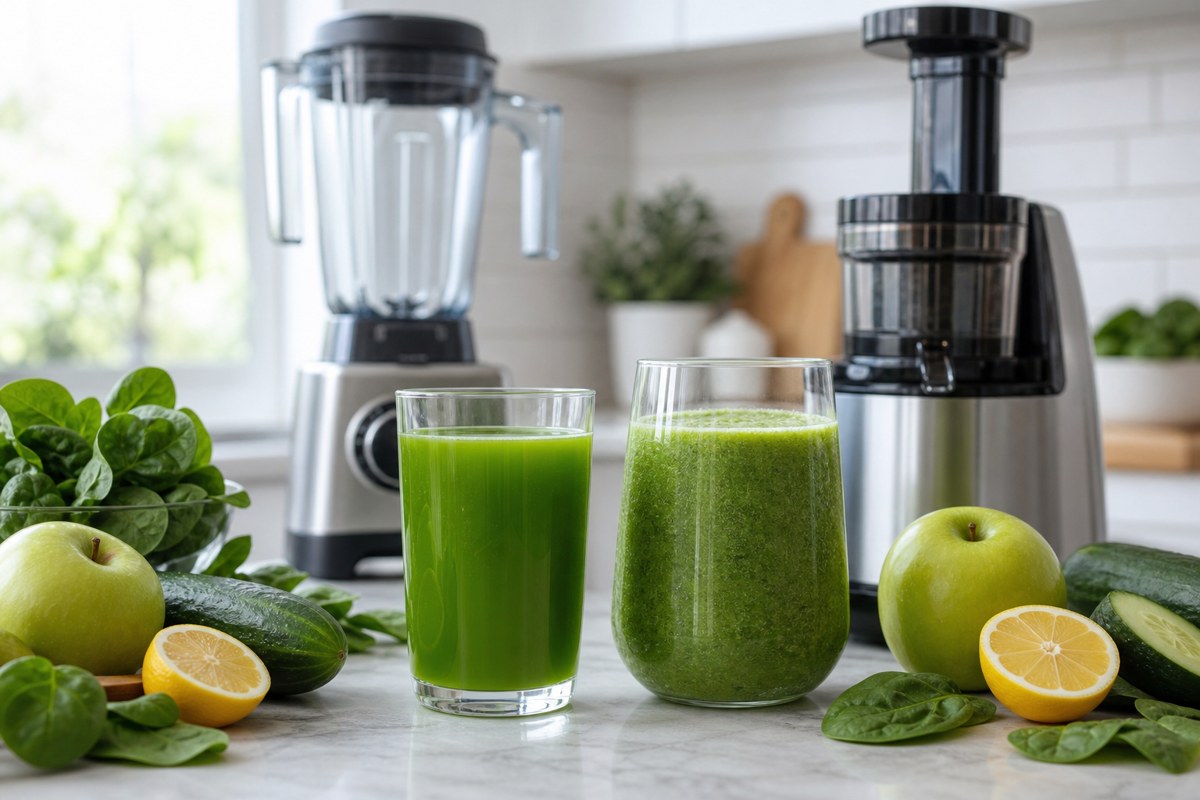
A juicer separates the juice from the fiber. A blender keeps everything, so you get a thicker smoothie with the fiber included. If you mostly want smoothies, a strong blender is the better buy. If you want clear, drinkable juice, especially green juice, you need a juicer. We compare the two in detail in cold press juicer vs Vitamix.
Tips for Getting More From Your Juicer
- Clean it right after juicing, before pulp dries on the strainer. Most strainers clean in a minute or two if you rinse them right away.
- With slow juicers, alternate soft and hard produce, and feed leafy greens between harder pieces so they don’t clog.
- Drink centrifugal juice soon after making it. Slow-juicer juice usually holds up a little better in a sealed jar in the fridge.
- Use the pulp. Carrot and apple pulp work in muffins, veggie burgers and broth.
New to juicing? Start with our guide on how to use a juicer and the juicer accessories worth having.
Juicer FAQ
Is a cold press juicer the same as a masticating juicer?
For home machines, yes, in most cases. “Cold press” is a marketing name for slow masticating juicers. True commercial cold-press machines use a hydraulic press, which is a different (and much more expensive) process.
Which type of juicer is easiest to clean?
It depends more on the model than the type. Look for fewer parts, dishwasher-safe pieces and a strainer that rinses clean. Many newer vertical slow juicers are designed specifically for faster cleanup.
Can a centrifugal juicer handle leafy greens?
It can, but it is not very efficient with them. A lot of the leaf ends up in the pulp. If greens are a big part of your juice, a slow juicer is the better tool.
Is a juicer worth it?
It is worth it if you will use it several times a week and it fits your routine. If you are unsure, start with an inexpensive centrifugal model and upgrade later if juicing sticks.