
As an Amazon Associate, we earn from qualifying purchases. This post contains affiliate links.
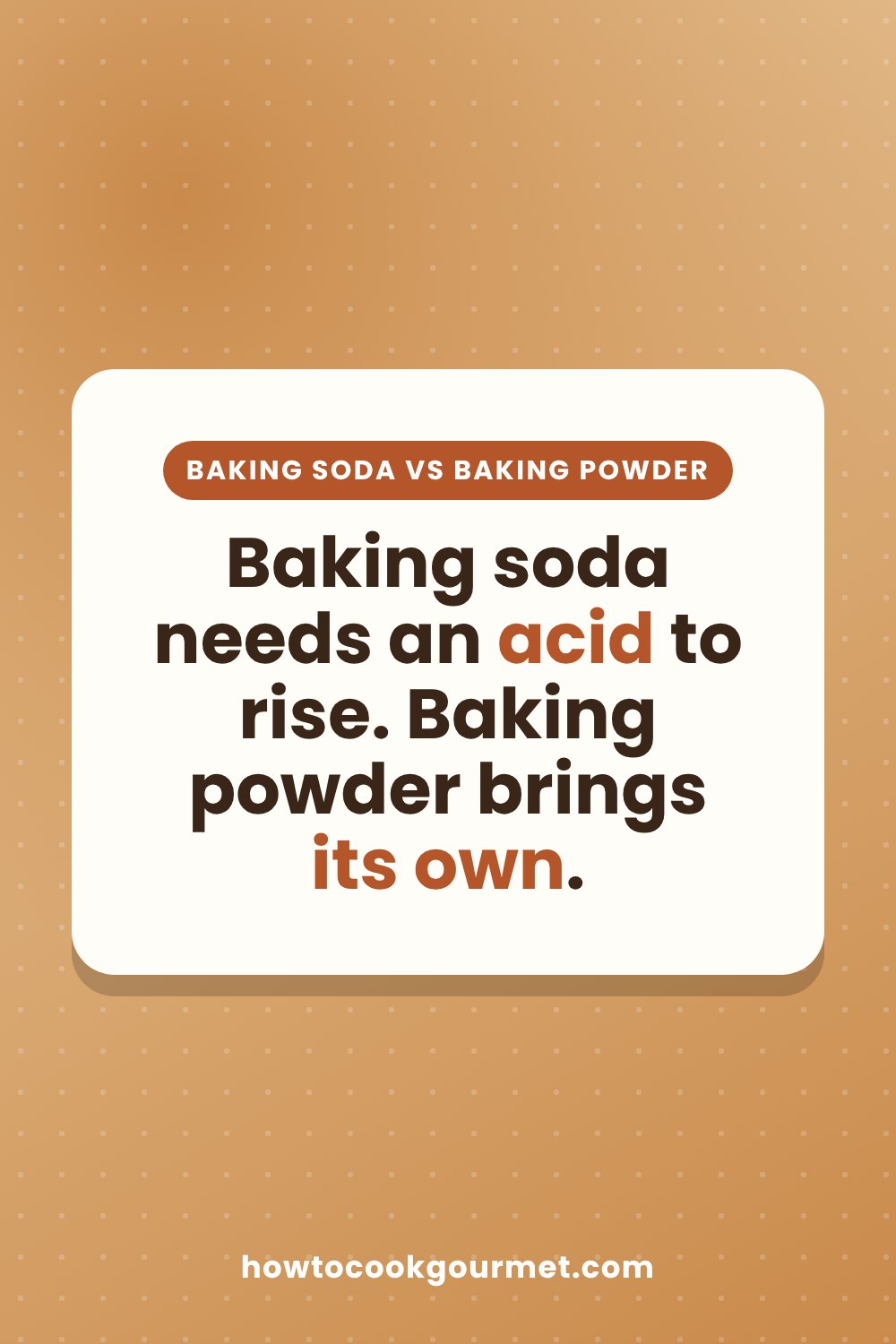
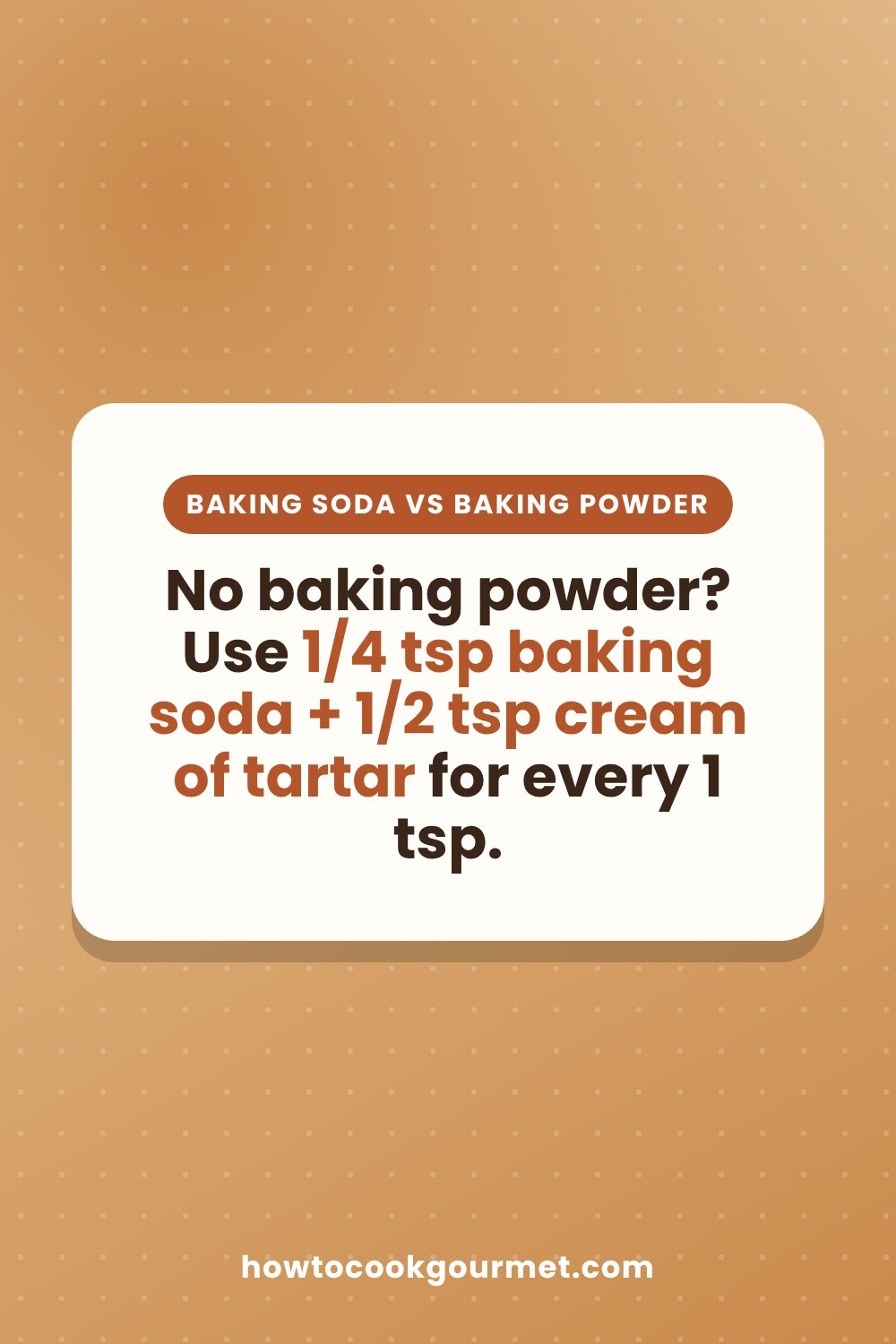
Quick answer: No, they are not the same. Baking soda is pure sodium bicarbonate and needs an acid in the recipe to make it rise, while baking powder is baking soda already mixed with a dry acid, so it works on its own. You can swap them in a pinch, but not one-for-one: 1 teaspoon of baking powder equals roughly 1/4 teaspoon of baking soda plus 1/2 teaspoon of cream of tartar.
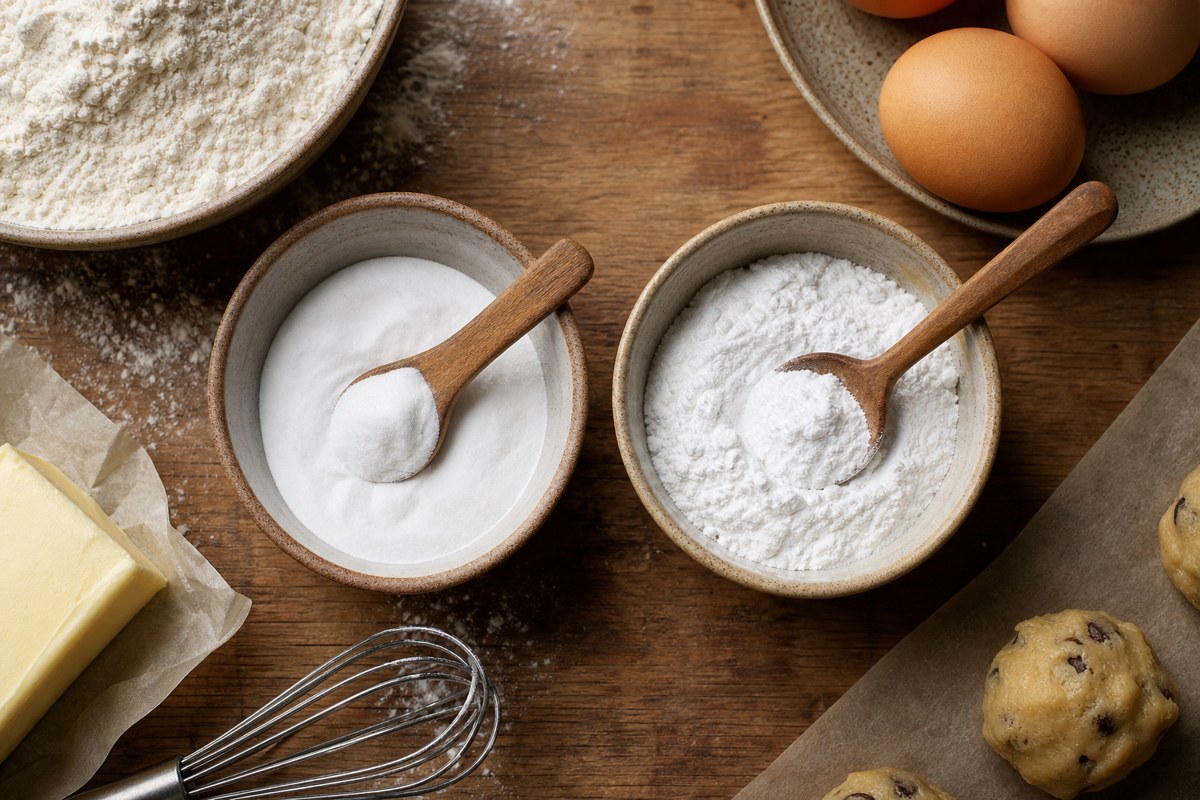
Holiday baking season is when these two little containers get the most use, and also when they cause the most confusion. They look almost identical, both are white powders, and both make cookies, cakes and quick breads rise. Grab the wrong one, though, and you can end up with flat, dense cookies or a cake with a soapy, metallic aftertaste.
The difference comes down to chemistry. Both release carbon dioxide gas, which forms the bubbles that lift a batter. What changes is what triggers that gas, how strong each one is, and what it does to flavor and browning. Here is how they compare side by side.
Baking Soda vs Baking Powder at a Glance
| Baking soda | Baking powder | |
|---|---|---|
| What it is | Pure sodium bicarbonate, a base | Baking soda plus one or more dry acids and a starch such as cornstarch |
| What activates it | An acid in the recipe (buttermilk, yogurt, lemon juice, brown sugar, molasses, natural cocoa) | Just moisture, and in double-acting powder, heat as well |
| Strength | About 3 to 4 times stronger | Milder, because much of it is acid and starch |
| Typical amount | About 1/4 tsp per cup of flour, balanced with an acid | About 1 to 1 1/2 tsp per cup of flour |
| Effect on baked goods | Encourages browning and spread; can taste soapy if overused | Even, fluffy rise with a neutral flavor |
| Best uses | Buttermilk pancakes, chocolate chip cookies, gingerbread, soda bread | Biscuits, sugar cookies, vanilla cakes, muffins |
| Shelf life once opened | Lasts a long time, but best for baking within about 6 months | Loses strength faster, usually within 6 to 12 months |
| Substitute ratio | 1 tsp soda = about 3 tsp baking powder | 1 tsp powder = 1/4 tsp soda + 1/2 tsp cream of tartar |
Rumford Aluminum-Free Baking Powder
If your can of baking powder has been open since last year, a fresh, aluminum-free one is a cheap way to make sure your holiday baking rises.
What Is Baking Soda?
Baking soda is sodium bicarbonate, a single ingredient that is alkaline (basic). On its own it does very little in a batter. When it meets an acid and moisture, it reacts right away and releases carbon dioxide, which is why batters made with baking soda should go into the oven fairly quickly.
Common acids that pair with baking soda include buttermilk, yogurt, sour cream, lemon juice, vinegar, brown sugar, honey, molasses and natural (non-Dutch-processed) cocoa. The soda neutralizes some of that acidity, which softens tangy flavors.
Baking soda also raises the pH of a dough, which speeds up browning and weakens gluten slightly. That is why it gives cookies their golden color and helps them spread. Because it is so strong, a little goes a long way; too much leaves a bitter, soapy or metallic taste.
What Is Baking Powder?
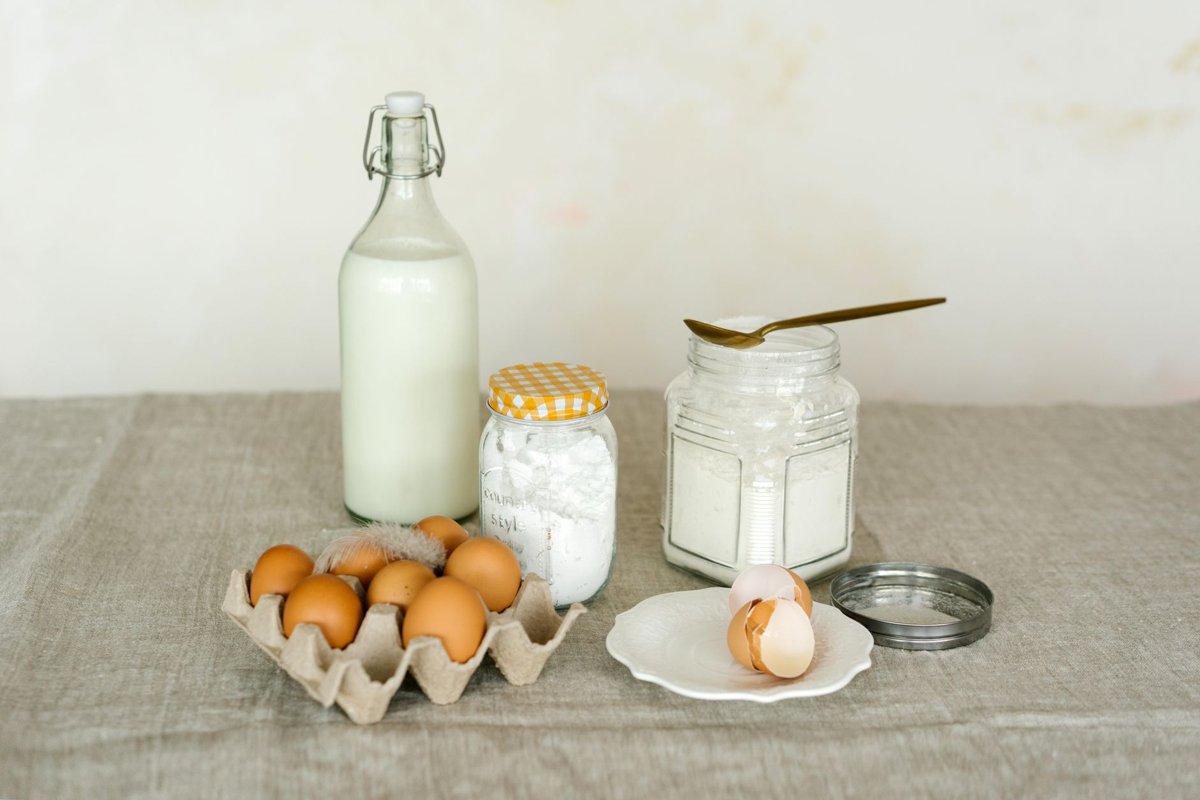
Baking powder is a complete leavening kit in one can. It contains baking soda, one or more powdered acids (such as cream of tartar, monocalcium phosphate or sodium aluminum sulfate) and a starch, usually cornstarch, that keeps the mix dry so it does not react in the container.
Most baking powder sold in U.S. stores is double-acting. It releases a first round of gas when it gets wet and a second round when it heats up in the oven. That second burst gives you a little more time between mixing and baking, and a reliable, even rise.
Because it brings its own acid, baking powder is used in recipes without much acidity, such as biscuits made with regular milk, sugar cookies and classic vanilla cakes. Some brands are labeled aluminum-free; they use a different acid, and some bakers prefer them because they find aluminum-based powders can leave a faint metallic taste.
Can You Substitute Baking Soda for Baking Powder?
- Out of baking powder: For every 1 teaspoon of baking powder, mix 1/4 teaspoon of baking soda with 1/2 teaspoon of cream of tartar. Stir it into the dry ingredients and bake soon after mixing, since this homemade version acts only once.
- Out of baking powder, but have buttermilk or yogurt: Use 1/4 teaspoon of baking soda plus 1/2 cup of buttermilk or plain yogurt in place of 1 teaspoon of baking powder, and reduce the other liquid in the recipe by 1/2 cup.
- Out of baking soda: Use about 3 times as much baking powder (1 teaspoon of soda becomes roughly 1 tablespoon of powder). Expect a slightly different flavor and less browning, and know that results vary in very acidic batters.
- Never swap them one-for-one. Using the same amount of soda in place of powder can make baked goods taste soapy, while the same amount of powder in place of soda usually leaves them flat and pale.
- Measure carefully. Leaveners are used in small amounts, so level off proper measuring spoons with a knife instead of eyeballing a heaping spoonful.
McCormick Gourmet Cream of Tartar
Keeping a jar of cream of tartar in the pantry means you can mix up homemade baking powder the moment you run out.
When to Use Each
- Use baking soda when the recipe has a clear acid, such as buttermilk pancakes, Irish soda bread, gingerbread with molasses or devil’s food cake made with natural cocoa.
- Use baking powder when the liquid is plain milk or water and there is little acid, as in biscuits, scones, sugar cookies, shortcakes and many muffins.
- Use both when a batter has some acid but needs more lift than that acid can provide. The soda neutralizes the acid and boosts browning, and the powder handles the rest of the rise. Many chocolate chip cookie, banana bread and pancake recipes work this way.
- Follow the recipe for holiday cookies. Chewy, spreading cookies usually lean on baking soda, while puffy, cakey cookies often call for baking powder.

What You’ll Need
OXO Good Grips Stainless Steel Measuring Spoons
Leaveners are measured in fractions of a teaspoon, so a sturdy, accurately marked set makes a real difference in how your baking turns out.
Rumford Aluminum-Free Baking Powder
A widely available double-acting, aluminum-free baking powder that works in biscuits, cakes and cookies.
Arm & Hammer Baking Soda, 1 lb
The standard pantry baking soda; buy a fresh box for baking and use the old one for cleaning.
McCormick Gourmet Cream of Tartar
Lets you mix your own baking powder in a pinch and also helps stabilize whipped egg whites.
Common Mistakes to Avoid
- Mixing up the containers. Label both clearly, especially if you decant them into matching jars.
- Using old leavener. Baking powder loses strength over time. Test it before a big baking day (see the FAQ below) and replace it if it barely fizzes.
- Using too much baking soda. Extra soda does not mean extra rise; it adds a soapy, metallic taste and can turn baked goods overly dark.
- Letting a soda batter sit. Baking soda reacts as soon as it is wet, so a batter that sits on the counter too long can lose some of its lift.
- Adding leavener straight to wet ingredients. Whisk it into the flour first so it is evenly distributed and you do not get bitter pockets.
- Scooping heaping spoonfuls. Level off each spoonful; even a small extra amount of baking soda is noticeable. A good set of measuring spoons helps here.
Baking Soda vs Baking Powder FAQ
Are baking soda and baking powder the same thing?
No. Baking soda is pure sodium bicarbonate and needs an acid to react, while baking powder already contains baking soda, a dry acid and a starch. Baking soda is also about 3 to 4 times stronger.
Can I use baking powder instead of baking soda?
Yes, in a pinch. Use about 3 times as much baking powder as the baking soda called for, so 1 teaspoon of soda becomes about 1 tablespoon of powder. The result may brown less and taste slightly different.
Which has more sodium, baking soda or baking powder?
Baking soda has considerably more sodium per teaspoon, roughly 1,200 mg or more, while baking powder has a few hundred milligrams per teaspoon depending on the brand. Since recipes use much less soda than powder, the difference per serving is smaller than it sounds.
How do I know if my baking soda or baking powder is still good?
For baking powder, stir 1/2 teaspoon into 1/4 cup of hot water; it should bubble vigorously. For baking soda, add a few drops of vinegar or lemon juice to 1/4 teaspoon; it should fizz right away. Store both tightly sealed in a cool, dry cupboard.
The Bottom Line
Baking soda and baking powder are related, but they are not interchangeable spoon for spoon. Reach for baking soda when the recipe already has an acid like buttermilk, brown sugar or molasses, and baking powder when it does not. If you run out of baking powder, a little baking soda plus cream of tartar does the job, and if you run out of baking soda, triple the baking powder. Keep both fresh, measure them carefully, and your holiday cookies will rise the way they should.
More from the kitchen: