
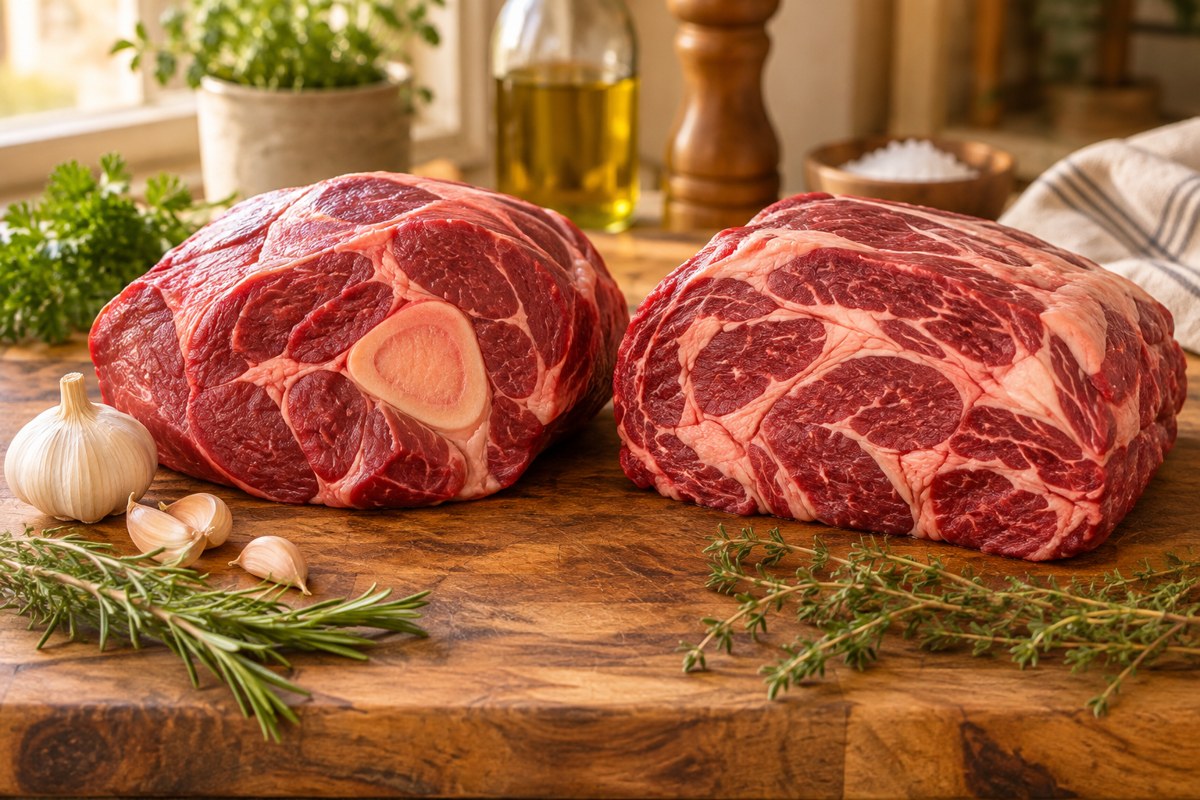
Standing in front of two sizable beef cuts and unsure which to take home? Arm roast or chuck roast? This is a common dilemma for many home cooks. Both cuts originate from the shoulder section of the cow, yet each offers distinct qualities. What sets them apart, and how do you select the ideal choice for your upcoming meal? Let’s explore the details.
As an Amazon Associate, we earn from qualifying purchases. This post contains affiliate links.
Understanding the Origins and Key Differences of Shoulder Roasts
The arm roast and chuck roast both come from the bovine shoulder but differ significantly in texture, fat content, and flavor profile. Imagine the arm roast as a leaner, firmer sibling, whereas the chuck roast embodies a fattier, more flavorful character.
This disparity influences the cooking techniques and final results. The arm roast contains less fat and fewer connective tissues, which makes it suitable for methods like slow roasting or grilling where you want defined slices. The chuck roast boasts more marbling and collagen; these convert into tender, juicy meat when cooked slowly over time, ideal for braising or stewing.
Choosing between these two hinges on the meal type: if you seek a leaner, neatly sliced roast with subtle beef flavor, arm roast is suitable. For a succulent, fork-tender dish that melts in your mouth, chuck roast excels.
- Arm Roast: Low fat, firm texture, best roasted or grilled
- Chuck Roast: Higher fat, rich marbling, perfect for braising and stewing
- Cooking Duration: Chuck requires extended slow cooking; arm roast cooks relatively faster
- Flavor Intensity: Chuck delivers a deep, robust beef flavor
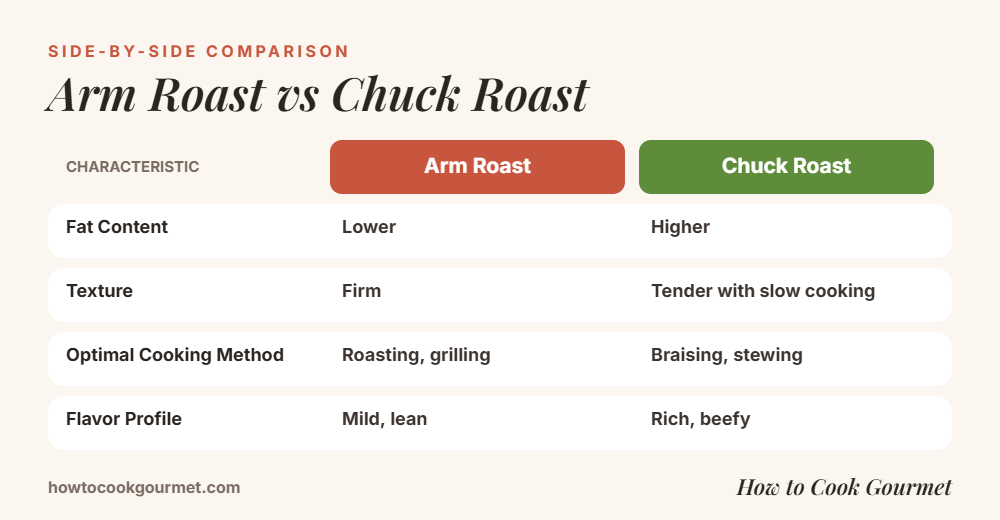
| Characteristic | Arm Roast | Chuck Roast |
|---|---|---|
| Fat Content | Lower | Higher |
| Texture | Firm | Tender with slow cooking |
| Optimal Cooking Method | Roasting, grilling | Braising, stewing |
| Flavor Profile | Mild, lean | Rich, beefy |
Next time you’re at the butcher’s counter, determine whether you want a roast ready in less time with cleaner slices, or a slow-smoked, tender stew. Your choice will define your dinner experience.

Enameled Cast Iron Dutch Oven
This enameled cast iron Dutch oven is a smart pick for home cooks deciding between arm roast and chuck roast, especially when slow cooking is on the menu. It helps you braise tougher shoulder cuts gently and evenly so they turn rich, tender, and easy to slice or shred.
- Great for slow braising
- Even heat for tender roasts
- Easy one-pot meal cooking
Best Culinary Approaches to Unlock Their Full Potential
Each beef cut is like a unique character, and your cooking technique is the key to revealing its strengths. The arm roast, with its lean qualities, benefits enormously from gentle, slow roasting that tenderizes without sacrificing its firm texture. Braising-the process of immersing the meat slowly in flavorful liquid like broth or wine-softens the fibers and infuses moisture beautifully.
Chuck roast offers impressive versatility. Its abundant fat and connective tissue break down during long, slow cooking, transforming it into luscious, fork-tender meat. Whether slow-cooked in a pot roast, smoked low and slow, or cooked in hearty stews, chuck roast consistently delivers comfort food excellence.
Recommended cooking styles include:
- Arm Roast: Braising, low and slow roasting, pressure cooking
- Chuck Roast: Slow cooking, smoking, stewing, braising
For those short on time, modern pressure cookers can tenderize either cut in under an hour, preserving the beef’s robust flavor while drastically reducing cooking time.
| Cut | Preferred Technique | Resulting Texture |
|---|---|---|
| Arm Roast | Braising | Tender yet slightly firm |
| Chuck Roast | Stewing / Smoking | Buttery soft, juicy |
Flavor and Texture: Which Roast Triumphs?
Deciding which roast takes the flavor and texture crown ultimately depends on your palate and patience.
The arm roast impresses with a leaner, cleaner taste and a satisfying chew. Its mild beef essence makes it ideal for dishes where you want defined slices and less richness.
In contrast, the chuck roast is a powerhouse of flavor, richly marbled and indulgently tender after prolonged cooking. If you love bold, succulent beef that practically dissolves on your tongue, chuck roast may be your go-to.
| Roast | Flavor | Texture | Suggested Cooking |
|---|---|---|---|
| Arm Roast | Mild, lean beef | Firm, less fatty | Slow roasting, braising |
| Chuck Roast | Bold, beefy, fatty | Soft, tender | Slow cooking, braising, pot roast |
Not sure where your preferences lie? Try both cuts and let your taste buds be the ultimate judge of this delicious debate!
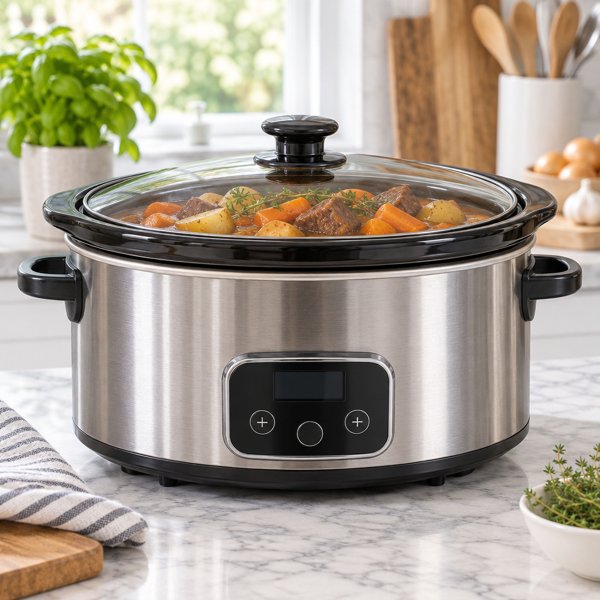
Programmable Slow Cooker
For home cooks choosing between arm roast and chuck roast, a programmable slow cooker takes the guesswork out of tender, low-and-slow meals. It helps chuck roast turn succulent and gives arm roast a gentle cook when you want easy prep and a hands-off dinner.
- Set-and-forget cooking convenience
- Great for braises and pot roasts
- Helps meat turn tender
How to Select the Ideal Roast for Your Meal
Picking the perfect roast can feel overwhelming, but focusing on a few factors makes the decision smoother.
Consider your available cooking time. The arm roast, while leaner, still benefits from prolonged cooking to break down muscle fibers. Chuck roast, with its higher fat content, thrives during extended braises or slow cooker sessions, resulting in luscious meat effortless to shred.
Also, think about the final dish. Need thin slices for sandwiches or plated meals with delicate sauces? Arm roast is excellent. Want shredded beef for tacos, casseroles, or classic pot roast? Chuck roast is your hero.
- Arm Roast: Lean, holds shape well, best sliced thin after slow cooking
- Chuck Roast: Rich, fatty, perfect for shredding and one-pot dishes
Budget-wise, chuck roast usually carries a lower price tag due to its popularity and marbling, making it a wallet-friendly but flavorful choice. Arm roast may cost a bit more, thanks to its lean profile and less widespread availability.
Ultimately, match your roast to your cooking style, flavor preferences, and meal plans for best results.
FAQs About Arm Roast and Chuck Roast
- What distinguishes arm roast from chuck roast?
- Both originate from the animal’s shoulder, yet arm roast is leaner and comes from the upper shoulder, while chuck roast contains more marbling and connective tissue, requiring longer cooking to tenderize.
- Which is better for pot roast or slow-cooked meals?
- Chuck roast is typically preferred because its fat and collagen convert into juicy tenderness over slow cooking. Arm roast can work but may be less rich.
- Can these roasts be swapped?
- You can substitute them, but expect variation in texture and richness: chuck roast will be more tender and flavorful, while arm roast will be leaner and firmer.
- How to cook these cuts for peak flavor?
- Opt for slow-cooking methods such as braising or roasting at low temperatures. Adding liquids like broth or wine helps keep the meat moist. Patience is key-cook until the meat is fork-tender.
- Which cut is more expensive?
- Arm roast generally carries a higher price due to its leaner nature, while chuck roast is often more affordable.
- Why is knowing the difference important?
- Understanding these cuts allows you to pick the right roast for specific recipes, whether you’re after rich, juicy tenderness or lean, neatly sliced beef.
Your Next Steps to Mastering Beef Roasts
Now that you’re armed with the essentials about arm roast and chuck roast, it’s easier to decide which fits your culinary ambitions. Remember:
- Arm roast is ideal for lean, tender roasts best enjoyed slow-cooked or braised.
- Chuck roast shines in rich, succulent dishes with longer cooking times that break down fat and collagen.
Will you experiment with each cut and uncover your favorite? At How To Cook Gourmet, we’re here to guide you toward roasting success every time. Get ready to elevate your kitchen game and impress your guests with perfectly cooked beef!
Keep reading:



Leave a Comment
You must be logged in to post a comment.