
For those passionate about coffee, deciding between an iced latte and a cold brew can be perplexing. Both beverages serve up refreshing coolness and caffeine but differ deeply in preparation, flavor profile, and caffeine content. Understanding these differences can elevate your coffee choices and help you match the drink with your unique taste and lifestyle.
Distinct Brewing Techniques: The Heart of the Difference
The key divergence between iced lattes and cold brews lies in their brewing methods. An iced latte starts with pulling hot espresso shots, which are then poured over ice and mixed with cold milk. This method delivers a bold, rich flavor with a smooth creaminess from the milk. In contrast, cold brew is crafted by immersing coarsely ground coffee beans in cold water for an extended period-usually between 12 to 24 hours. This slow extraction process creates a coffee that is much less acidic, with a naturally mellow and smooth taste.
Milk’s Role: Creamy Contrast Versus Subtle Softness
The addition of milk profoundly influences each drink’s character. In iced lattes, milk cuts through the intensity of the espresso, adding a silky texture that complements the coffee’s sharpness. When milk is poured into cold brew, it enhances its already gentle flavor, producing a softly balanced beverage that’s easy to sip and much lighter on the palate. Whether you prefer a robust punch or a calm, gentle coffee experience determines which milk-coffee combination aligns with your preferences.
Comparative Overview at a Glance
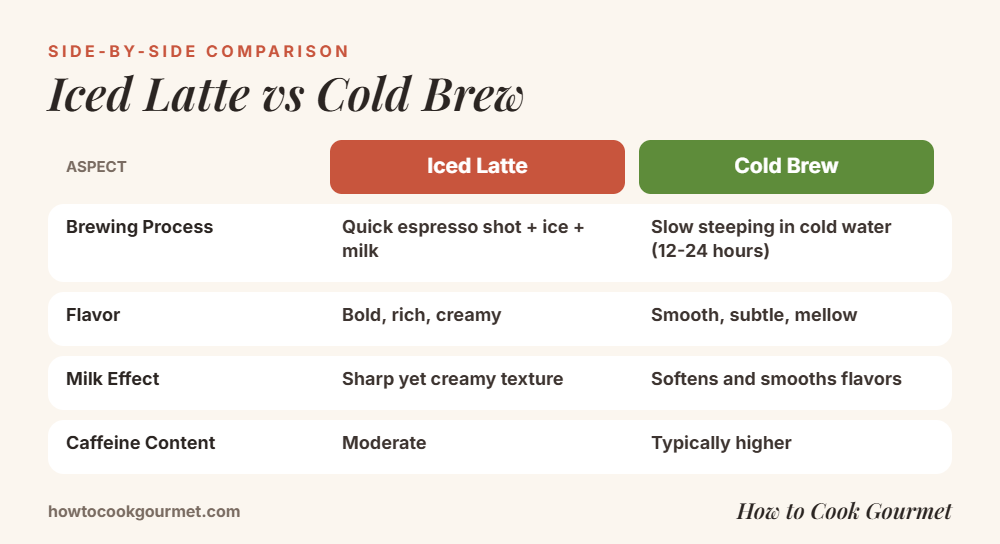
| Aspect | Iced Latte | Cold Brew |
|---|---|---|
| Brewing Process | Quick espresso shot + ice + milk | Slow steeping in cold water (12-24 hours) |
| Flavor | Bold, rich, creamy | Smooth, subtle, mellow |
| Milk Effect | Sharp yet creamy texture | Softens and smooths flavors |
| Caffeine Content | Moderate | Typically higher |
The Caffeine Curve: Quick Jolt or Steady Boost?
Interestingly, cold brew often delivers a higher caffeine concentration than an iced latte, attributed to its prolonged brewing time which extracts more caffeine. However, your caffeine experience depends on personal preference: if you seek an immediate burst of energy, an iced latte’s espresso shot might be your go-to. Alternatively, if you prefer a more gradual, sustained alertness, cold brew offers a slow-release caffeine effect ideal for longer days.
- Iced lattes provide an instant and vibrant energy lift.
- Cold brew offers a smooth, extended caffeine release.
- Milk’s integration creates distinct sensory experiences in each drink.
Mastering the Craft at Home: Brewing Tips
Recreating these café classics at home is rewarding and surprisingly simple. For iced lattes, prepare freshly brewed espresso, chill your favorite milk, and pour the espresso over a glass filled with ice and milk for a creamy coffee delight. Producing cold brew involves steeping ground coffee in cold water for 12-24 hours before straining the mixture. Although time-intensive, cold brew preparation requires basic equipment and patience, resulting in a refreshing coffee concentrate perfect for customization.
Answering Your Burning Questions About Iced Latte and Cold Brew
What defines an iced latte?
An iced latte combines one or two shots of espresso with cold milk and ice. The result is a creamy yet energetic drink reminiscent of a chilled coffee milkshake, ideal for those craving a quick yet velvety caffeine hit.
How is cold brew fundamentally different?
Cold brew foregoes heat entirely, relying on a long soak of coffee grounds in cold water. This process limits acidity, producing a drink that’s naturally smooth and can be served over ice with or without milk-essentially coffee’s relaxed cousin.
Which coffee provides more caffeine?
Cold brew generally contains more caffeine per serving due to its extended brewing duration allowing better extraction. However, caffeine levels also vary by coffee bean type, serving size, and dilution methods.
Which is more delicious?
Flavor preference is subjective. If you enjoy creamy and intense tastes, the iced latte is a natural pick. Conversely, if mellow and subtle notes appeal to you, cold brew will likely delight your palate. Selecting the better-tasting option is a personal journey, much like choosing between two beloved but distinct songs.
Calorie and sweetness comparison
| Drink | Sweetness Level | Calories (per 8 oz) |
|---|---|---|
| Iced Latte | Often naturally sweet due to milk or added syrups | Approximately 80-150 |
| Cold Brew | Tends to be more bitter; sweetness added if desired | About 5-10 (black) |
Are these easy to prepare at home?
Definitely! An iced latte needs only espresso, milk, and ice, while cold brew demands patience but minimal tools: coarsely ground coffee, cold water, a container for steeping, and a strainer. Choose according to your timing and enthusiasm.
Which drink suits warmer weather?
Both chilled beverages refresh effectively, but cold brew serves as a crisp, milk-free option that feels lighter, whereas iced lattes provide a creamy coolness that many find comforting on hot days. Your summer mood might decide your favorite cool companion.
What about ecological impact?
Considering sustainability, cold brew generally uses larger amounts of coffee grounds because of its long steep time, whereas iced lattes rely on precise espresso extraction, using less coffee overall. Choosing your preferred drink can also be a choice about your carbon footprint.
Are flavor customizations possible?
Absolutely! Both drinks lend themselves well to creative enhancements such as vanilla, caramel, cinnamon, or nutmeg additions. Non-dairy milks like oat, almond, or soy seamlessly integrate, allowing endless personalization for curious palates.
Final Thoughts: Which Coffee Will You Choose?
Ultimately, whether you favor the bold creaminess of an iced latte or the relaxed smoothness of cold brew, both beverages offer unique and satisfying coffee experiences. Your choice may shift with mood, season, or the desire for caffeine intensity. Now equipped with these insights, you can confidently select or craft your perfect chilled coffee companion. Cheers to better coffee moments ahead!
Keep reading:



Leave a Comment
You must be logged in to post a comment.