
Air fryers and air roasters often get lumped together because they both use circulating hot air to cook food, but understanding their distinct features can elevate your home cooking. If you’ve ever wondered whether to invest in an air fryer or an air roaster, or how each gadget transforms your meals, you’re in the right place.
At How To Cook Gourmet, we believe that grasping these differences not only enhances the taste of your dishes but also saves you time and money by choosing the right appliance. Let’s dive into what sets these two kitchen tools apart, how they manipulate heat and airflow, and which ones shine with specific foods.
The Essential Contrast: Air Fryer or Air Roaster?
Though both air fryers and air roasters utilize hot air convection to cook food, their design intents and outcomes vary significantly. Picture the air fryer as your go-to for quick, crunchy bites – its compact basket allows air to rapidly circulate, crispening food in minutes. In contrast, air roasters offer a larger cooking area, often equipped with racks, designed for slow, thorough cooking that seals in moisture and produces golden-brown finishes.
Choosing between them boils down to understanding your cooking priorities. Do you crave rapid crispiness or prefer the slow, even roasting of larger cuts? Both appliances promote healthier cooking by minimizing oil use, making them modern alternatives to traditional frying and roasting.
- Air Fryer: Compact size, speedy cooking, perfect for snacks and smaller portions
- Air Roaster: Spacious interior, slower heat application, ideal for whole meals and larger ingredients
How Airflow and Temperature Shape Cooking Outcomes
The way heat and air move inside these appliances is like a carefully orchestrated performance. Air fryers employ powerful, high-speed airflow, swirling intensely to rapidly crisp exteriors – excellent for finger foods such as wings or fries. On the other hand, air roasters use gentler, steadier airflow combined with moderate heat to cook food evenly, developing richer flavors and tender textures over time.
By tailoring airflow and temperature, these gadgets cater to different cooking styles:
- Air Fryer: High heat, rapid air movement, quick crisping results
- Air Roaster: Moderate heat, steady circulation, slow and uniform cooking
Ultimately, both appliances harness convection cooking but diverge in pace and intensity, influencing everything from texture to flavor. Whether you’re after crispy snacks or slow-roasted, juicy dishes, knowing the science helps you get consistent results.
Best Food Matches for Air Fryers and Air Roasters
Different foods thrive under distinct cooking methods. Air fryers excel at creating golden, crispy textures quickly and are perfect for smaller, uniform pieces that benefit from high heat.
- Crispy potato fries and hash browns
- Chicken wings, tenders, and breaded appetizers
- Lightly battered vegetables like thin zucchini or eggplant chips
Meanwhile, air roasters are designed to gently cook larger or denser foods evenly, which helps retain moisture and develop deep flavors, making them ideal for:
- Whole chickens and large roasts
- Root vegetables such as carrots, sweet potatoes, and beets
- Thick meat cuts requiring slow, steady heat
- Hearty vegetables like cauliflower and broccoli florets
For baked goods like cakes, the slower, more consistent heat of an air roaster yields better results than the intense air frying environment. Frozen convenience foods crisp up nicely in an air fryer, while large meals call for the air roaster’s spacious interior.
Selecting the Right Appliance for Your Culinary Style
Think of choosing between an air fryer and an air roaster like picking the perfect cooking companion. Are you cooking for speed or for savoring flavors? Do your typical meals involve quick snacks or elaborate roasts? Assessing these questions helps you decide the best fit for your kitchen.
Consider the average portion sizes you prepare too. Air fryers suit smaller households or individuals who often whip up quick dishes, whereas families preparing bulk meals benefit from the larger capacity of air roasters.
- Air Fryer: Fast, efficient, ideal for small batches
- Air Roaster: Slow-cooked, juicy results, great for bigger portions
- Both: Healthy cooking alternatives using minimal oil
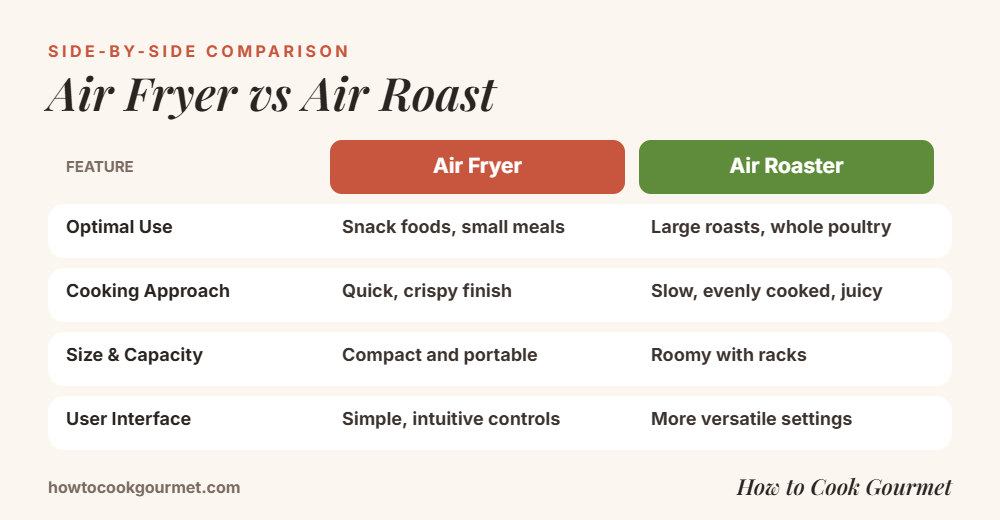
| Feature | Air Fryer | Air Roaster |
|---|---|---|
| Optimal Use | Snack foods, small meals | Large roasts, whole poultry |
| Cooking Approach | Quick, crispy finish | Slow, evenly cooked, juicy |
| Size & Capacity | Compact and portable | Roomy with racks |
| User Interface | Simple, intuitive controls | More versatile settings |
Frequently Asked Questions
Q: What distinguishes air frying from air roasting?
Both utilize circulating hot air, but air frying focuses on speed and crispiness for bite-size foods, while air roasting gently cooks larger items with an emphasis on moisture retention and even browning.
Q: Can a single appliance handle both air frying and air roasting?
Many modern air fryers include roasting modes, making them versatile enough to cover both. However, if you cook large meals often, a dedicated air roaster with ample space might serve better.
Q: Which method is healthier?
Both air frying and air roasting demand little to no oil, drastically reducing fat compared to traditional frying. Air frying might use a slight amount more oil for crispness, but generally, both promote nutritious cooking.
Q: What foods are ideal for each?
- Air Fryer: Fries, chicken nuggets, thin-cut veggies, onion rings
- Air Roaster: Whole birds, dense vegetables, thick meat cuts
Q: Do cooking times differ significantly?
Yes. Smaller items in air fryers cook in about 10-20 minutes, while larger roasts or whole chickens in air roasters can take 45-90 minutes.
Q: Which produces better flavor?
Both impart unique flavors – air frying delivers a crunchy, golden texture, while air roasting brings out rich, caramelized, and moist results. Your choice depends on craving crunchiness or tender roast flavors.
Final Thoughts: Embrace Both for Culinary Success
Ultimately, air fryers and air roasters both hold valuable places in a modern kitchen. Use air fryers for swift, crispy snacks and small meals, and air roasters when aiming for juicy, slow-roasted dishes with beautiful browning.
Still undecided? Reflect on your regular cooking habits: Are you more of a quick snacker or a slow-cooked dinner enthusiast? Both gadgets help you prepare homemade gourmet meals with ease and health in mind.
Whichever path you choose, you’ll add a powerful tool that makes delicious, healthier cooking accessible. So, ready to upgrade your culinary game? The kitchen is waiting!
Keep reading:



Leave a Comment
You must be logged in to post a comment.