
Standing before the meat counter, trying to decide between beef back ribs and short ribs can feel overwhelming-you’re certainly not alone. At How To Cook Gourmet, we understand how perplexing rib choices can be. Though both cuts originate from the rib section of the cow, their characteristics and ideal cooking techniques vary greatly. Curious to uncover what sets them apart? Let’s break it down with fresh insights and up-to-date details.
Understanding the Origins: Where Do These Ribs Come From?
Beef back ribs are taken from the upper portion of the rib cage, located near the spine. These ribs are essentially the leftover bones after the coveted ribeye steaks have been removed. They feature relatively less meat, which mainly clings near the bone, but when prepared correctly, they deliver a robust, smoky flavor.
In contrast, short ribs are harvested from the lower rib area-close to the belly of the cow. They contain generous, thick layers of meat accompanied by marbled fat and connective tissue, making them ideal for low and slow cooking methods. This results in tender, succulent ribs that dissolve in your mouth and are beloved in many cuisines worldwide.
Key Differences at a Glance
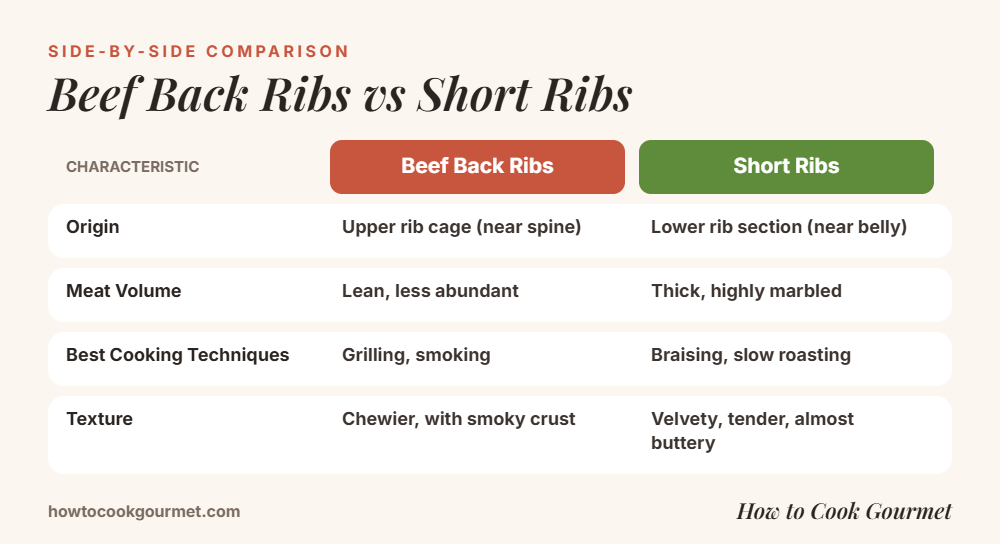
| Characteristic | Beef Back Ribs | Short Ribs |
|---|---|---|
| Origin | Upper rib cage (near spine) | Lower rib section (near belly) |
| Meat Volume | Lean, less abundant | Thick, highly marbled |
| Best Cooking Techniques | Grilling, smoking | Braising, slow roasting |
| Texture | Chewier, with smoky crust | Velvety, tender, almost buttery |
Cooking Approaches: Patience or Speed?
The cooking demands of these ribs vary markedly. Beef back ribs are relatively straightforward and quicker to prepare due to their leaner nature. If time is limited, grilling back ribs over medium heat for about 60 to 90 minutes can yield a juicy, flavorful meal perfect for a casual barbecue.
Short ribs, enriched with connective tissues and fat, require a gentler hand and longer cooking time. Slow cooking-whether by braising in liquid or smoking at low temperatures for 3 to 4 hours-transforms these tougher ribs into tender masterpieces packed with intense, beefy richness. For example, the annual National Barbecue Association highlights an increase of 25% in slow-smoked short rib dishes due to their growing popularity.
Cooking Time Summary
- Beef Back Ribs: Medium heat grilling for 1-1.5 hours
- Short Ribs: Low and slow (braising or smoking) for 3-4 hours
Flavor Profiles: What to Expect from Each Cut?
When it comes to flavor, back ribs and short ribs each offer unique experiences tailored to different palates. Back ribs bring a leaner yet smoky and savory bite that is ideal for those who appreciate a bit of chew and a caramelized crust. Their bold grilled flavor pairs well with dry rubs and spicy marinades.
On the flip side, short ribs are renowned for their deeply rich, unctuous beef flavor, owing to the generous marbling and connective tissue. Slow cooking melts the fat and collagen, yielding velvety, meltingly tender meat that many food lovers equate to “comfort food perfection.” Think of a classic Korean galbi or a hearty beef stew-both showcase the potential of short ribs brilliantly.
Flavor Comparison Table
| Rib Type | Taste Experience | Cooking Techniques |
|---|---|---|
| Beef Back Ribs | Smoky, lean, with crispy edges | Grilling, smoking |
| Short Ribs | Rich, juicy, tender | Braising, slow roasting |
Picking the Perfect Rib Cut: What to Consider
Choosing between back ribs and short ribs depends on your culinary goals, patience level, and flavor preferences:
- Beef Back Ribs: Opt for back ribs if you want a rib cut that grills up quickly with a satisfying smoky bite. They’re a great choice for casual outreach or quick weekend cookouts.
- Short Ribs: If your taste buds desire tender, succulent meat that falls effortlessly off the bone, and you’re comfortable with longer cooking methods, short ribs are your best bet.
Health-wise, leaner back ribs typically contain fewer calories and less fat, making them appealing for lighter meals. Conversely, short ribs deliver richness and indulgence, suitable for special occasions or hearty dinners. According to recent USDA data, short ribs contain approximately 25% more fat content compared to back ribs, which impacts both flavor and calorie count.
Quick Decision Chart
| Cut | Ideal Cooking Method | Meat-to-Bone Ratio |
|---|---|---|
| Beef Back Ribs | Grilling, smoking | Moderate |
| Short Ribs | Braising, slow roasting | High |
Frequently Asked Questions about Beef Ribs
- What distinguishes beef back ribs from short ribs?
- Back ribs come from the upper rib cage, leaner with less meat, while short ribs are cut from the lower rib section, featuring thicker meat and more fat for slow cooking.
- Which cut is more meat-heavy?
- Short ribs offer significantly more meat, making them perfect for hearty dishes requiring tender, juicy results.
- Are back ribs faster to cook than short ribs?
- Yes. Due to less fat and connective tissue, back ribs generally take under two hours on medium heat, whereas short ribs require slow cooking over several hours.
- Can I substitute one rib cut for the other in recipes?
- Usually not. Back ribs excel when grilled or smoked quickly, while short ribs need long, moist cooking methods. Switching them can affect texture and flavor.
- How cost-effective are these cuts?
- Generally, back ribs are more budget-friendly due to their lower meat content, while short ribs command higher prices for their rich meat quality.
- Are both suitable for family meals, including kids?
- Absolutely. Just ensure ribs are thoroughly cooked until tender. Kids especially enjoy the fall-apart quality of slow-cooked short ribs.
Final Thoughts: Pick Your Rib Personality
To sum it up: if you’re craving ribs with a smoky crust and a bit of toothsome texture, beef back ribs are your quick and tasty go-to. For those who savor rich, luscious bites that practically melt in your mouth, slow-cooked short ribs are unrivaled.
Whether grilling under the summer sun or braising on a leisurely weekend, both rib cuts offer unique pleasures that can elevate your meat-eating experience. So why not experiment with each and become a genuine rib connoisseur? Your next great BBQ story awaits!
Keep reading:


Leave a Comment
You must be logged in to post a comment.