
As an Amazon Associate, we earn from qualifying purchases. This post contains affiliate links.
Essential Food Strainers Every Gourmet Kitchen Needs
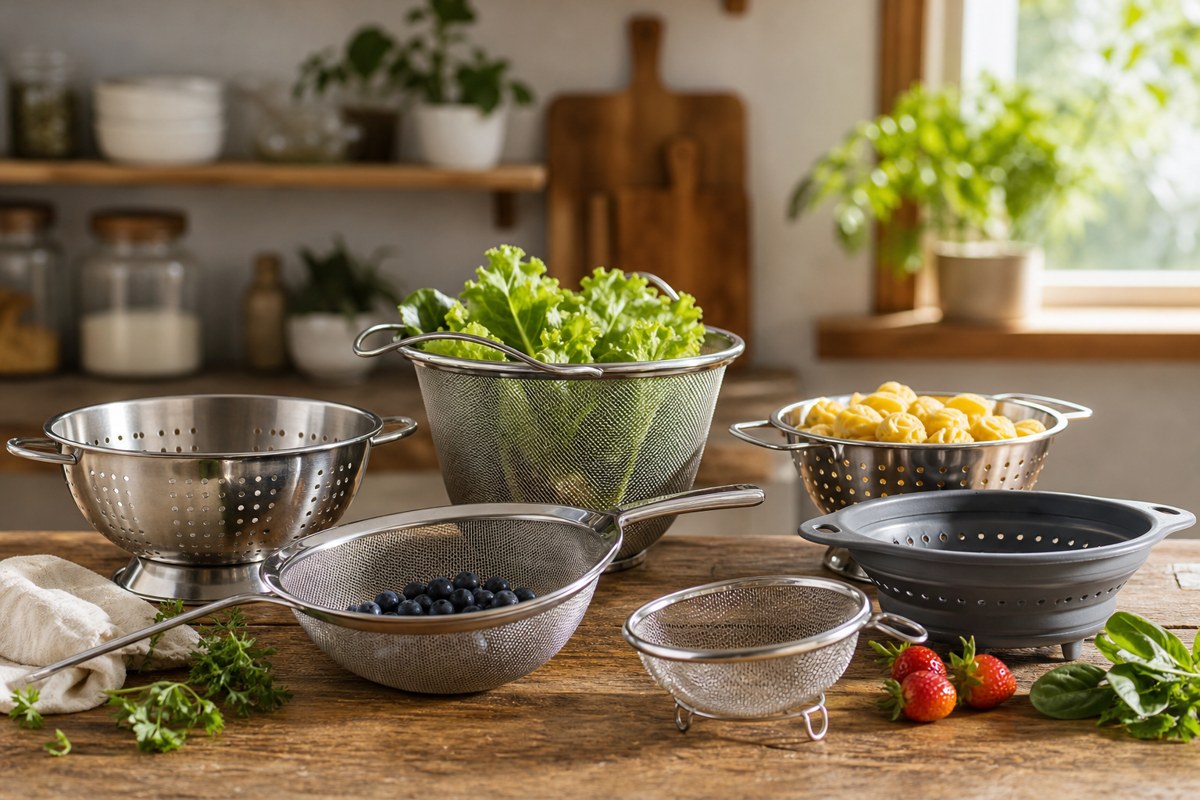
Mastering gourmet cooking hinges on selecting the right tools for specific culinary tasks-and having them readily accessible. This principle is especially true when it comes to food strainers. Using an inappropriate strainer can severely compromise the quality of your dish, often worse than not straining at all.
Fine Mesh & Perforated Strainers: Chinois vs. China Cap

Both the chinois and china cap are conical metal strainers primarily used for clarifying stocks and sauces. The chinois boasts an ultra-fine mesh suitable for delicate preparations such as consommé or velouté. In contrast, the china cap features perforated steel and is effective when paired with a pestle to mash softer ingredients like cooked fruits or vegetables to produce smooth purées.
Pro Tip: Investing in a quality chinois can elevate your sauces and custards alike, ensuring silky textures effortlessly.
Removing Surface Impurities: Skimmer & Spider Tools

Skimmers and spider strainers come with elongated handles designed for lifting or skimming. The skimmer’s wide, flat mesh is ideal for removing scum or fat floating atop broths, stocks, or sauces. Meanwhile, the spider’s intricately woven, fine mesh is perfect for extracting fried or boiled items from hot oil or water without excess liquid.
Kitchen Favorite: I rely on my spider strainer when frying calamari or tempura for quick draining and perfect crispness.
Multipurpose Cheesecloth: More Than Just Straining

Cheesecloth, a loosely woven cotton gauge, serves versatile roles in the kitchen: straining delicate stocks, bundling herbs for poaching fish or poultry, and even making homemade nut milk or yogurt. For best performance, rinse it thoroughly before use to eliminate lint and ensure it doesn’t pick up unwanted flavors.
Always stocked: Given its adaptability, I keep multiple layers of cheesecloth handy, finding new culinary uses regularly.
Effortless Pureeing and Straining: The Food Mill Advantage

The food mill seamlessly combines the functions of straining and pureeing. Simply fill the hopper, crank the handle, and the blade presses the food through a perforated disk-creating a fine puree without skins or seeds. This tool excels with tomatoes, apples, and potatoes.
Bonus tool: A potato ricer complements the food mill well, especially for fluffy mashed potatoes or expelling excess moisture from frozen greens like spinach or kale, enhancing texture without extra effort.
Perfecting Dry Ingredients: Flour Sifters

Flour sifters play a vital role in baking by aerating dry components like flour, cocoa, and leavening powders to eliminate lumps and evenly blend ingredients. This lightens batters and contributes to consistent, tender pastries and breads.
Baking tip: Regularly sifting your flours and leaveners can improve rise and texture, especially important in delicate sponge cakes and puff pastries.
Building a Complete Straining Arsenal
Just as with any specialized kitchen tool, owning the appropriate strainer tailored to each task will significantly enhance your culinary results. I personally maintain every type discussed here-trust me, no gourmet kitchen should be without them.
Equip yourself with these essential strainers, and transform your cooking into a streamlined, professional experience.
Which Strainer Should You Use?
| Tool | Mesh | Best for |
|---|---|---|
| Colander | Large holes | Draining pasta, rinsing produce |
| Fine-mesh sieve | Fine | Sauces, custards, sifting, rinsing quinoa |
| Chinois | Very fine, cone-shaped | Silky sauces, stocks, purées |
| China cap | Perforated metal, cone-shaped | Pressing cooked vegetables, coarse straining |
| Spider | Open wire basket | Lifting fried foods, dumplings, blanched vegetables |
| Skimmer | Flat, fine | Skimming foam and fat from stocks |
| Cheesecloth | Woven cotton | Clear stocks, yogurt, cheese, herb bundles |
| Food mill | Interchangeable discs | Mashed potatoes, tomato sauce, applesauce |
Caring for Your Strainers
- Rinse right away. Food dries hard in fine mesh. Rinse from the outside in to push particles back out.
- Use a brush, not a sponge. A stiff dish brush cleans mesh without snagging it.
- Do not force it. Press solids gently with a ladle or spatula; jabbing with a spoon can tear fine mesh.
- Dry completely before storing to prevent rust on wire and tin parts.
Food Strainer FAQ
What is the difference between a chinois and a sieve?
A chinois is a cone-shaped, very fine-mesh strainer that channels liquid into a pot or bowl, which makes it ideal for sauces and stocks. A sieve is usually bowl-shaped and is a good all-rounder.
Can I use cheesecloth instead of a fine-mesh strainer?
Yes. Line a regular strainer with a double layer of cheesecloth to catch very fine particles.
What strainer do I need for frying?
A spider strainer. Its wide wire basket lifts food out of hot oil quickly and lets the oil drain.
Keep reading:
Recommended Gear

Fine-mesh strainer set
A fine-mesh strainer set is a smart pick for home cooks who want smoother sauces, cleaner broths, and easy rinsing for grains or produce. It helps catch tiny bits without slowing you down, making everyday prep feel more polished and precise.
- Catches fine particles easily
- Great for stocks and sauces
- Rinses grains and produce
Chinois strainer
Ultra-smooth sauces and purees.
Colander
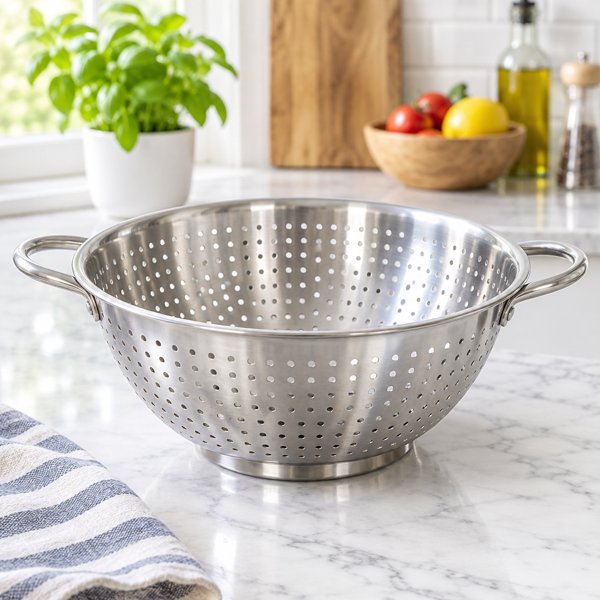
A colander is a kitchen staple for home cooks who want quick, clean draining without fuss. It helps rinse produce, drain pasta, and make everyday prep feel more organized and efficient.
- Fast draining for busy meals
- Handy for rinsing fresh produce
- Simple tool for everyday prep