
Unpacking the Distinctive Flavor Profiles of Beef and Pork Ribs
At the heart of their difference lies taste and texture. Beef ribs offer a bold, robust flavor with a richness that stands up perfectly to heavy spices and smoky sauces. Meanwhile, pork ribs tend to be sweeter and more delicate, allowing nuanced flavors and marinades to take the spotlight.
Think of beef ribs as the heavyweight contender in the rib world-larger, fattier, and delivering a mouth-coating juiciness. Pork ribs, on the other hand, are lighter and cook more quickly, making them ideal for casual, spontaneous meals.
- Beef ribs: Deep, hearty, and exceptionally savory.
- Pork ribs: Mild, tender, with a natural sweetness enhanced by smoke.
Mastering the Art of Cooking: Techniques and Timing for Ribs
Achieving perfection with ribs depends heavily on how you cook them. Beef ribs benefit greatly from a “low and slow” approach – smoking or roasting at roughly 225°F for up to 6 hours allows the fat to render gradually, tenderizing the meat without drying it out.
In contrast, pork ribs cook faster-typically within 3 to 4 hours at about 250°F. Overcooking can cause pork ribs to fall apart, which some enjoy, but keeping a little bounce can really showcase texture.
- Beef ribs: Wrap in foil after a few hours to retain moisture and intensify tenderness.
- Pork ribs: Season with a dry rub, then glaze during the last 30 minutes to lock in flavor.
- Use a reliable meat thermometer to aim for an internal temperature around 200°F for beef ribs and 190°F for pork ribs.
| Rib Type | Cooking Temperature | Estimated Time | Pro Tip |
|---|---|---|---|
| Beef Ribs | 225°F | 6 Hours | Foil Wrap Midway |
| Pork Ribs | 250°F | 3-4 Hours | Finish with Glaze |
Smoking infuses the meat with complexity, while gentle heat breaks down tough connective tissue. Whether you prefer beef’s substantial chew or pork’s tender pull, mastering heat and timing ensures memorable ribs every time.
Deciding Factors: Flavor, Price, and Serving Size
Choosing between beef and pork ribs also comes down to your palate, budget, and occasion. Beef ribs demand more cooking time and often come at a higher price due to their size and meatiness. Pork ribs are quicker to prepare and generally more affordable, fitting effortlessly into casual get-togethers.
- Flavor: Beef ribs offer a smoky depth, while pork ribs present a sweeter, lighter taste.
- Cost: Beef ribs tend to be pricier; pork ribs are budget-friendly.
- Cooking Time: Beef ribs require a longer, slower cook; pork ribs are better for faster meals.
- Portion Size: Beef ribs provide larger servings per rack, optimal for feeding bigger groups.
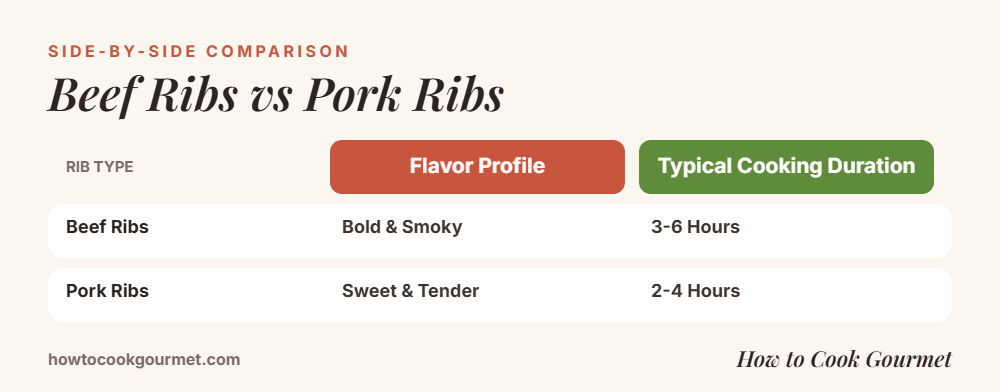
| Rib Type | Flavor Profile | Typical Cooking Duration |
|---|---|---|
| Beef Ribs | Bold & Smoky | 3-6 Hours |
| Pork Ribs | Sweet & Tender | 2-4 Hours |
Are you leaning towards a slow-cooked, satisfying experience with beef, or a quick, flavorful pork rib feast? Sampling both is an excellent way to refine your favorite.
Enhancing Your Rib Feast: Sauce and Side Dish Pairings
The right accompaniments can elevate ribs from good to unforgettable. Have you ever had a sauce that overshadowed the meat? Striking balance in flavor pairing is key.
For beef ribs, deeply smoky barbecue sauces or sophisticated options like a red wine reduction or espresso-infused rub complement the intense flavor wonderfully, adding layers without overwhelming.
Pork ribs thrive with sweeter, tangier sauces such as apple cider vinegar or honey mustard, which accentuate the pork’s natural nuances.
Ideal Side Dishes to Complement Each Rib
- Beef Ribs: Creamy mashed potatoes, grilled seasonal vegetables, and smoky baked beans.
- Pork Ribs: Crisp coleslaw, tangy pickled vegetables, or sweet potato wedges.
| Rib Type | Suggested Sauce | Perfect Side |
|---|---|---|
| Beef | Smoky BBQ or Red Wine Reduction | Grilled Corn on the Cob, Mashed Potatoes |
| Pork | Honey Mustard or Apple Cider Vinegar | Coleslaw, Pickled Vegetables |
When you craft thoughtful sauce and side combinations, each bite delivers harmony and excitement to your palate. Ready to experiment with pairings for your next grilling session?
Frequently Asked Questions About Beef and Pork Ribs
Q: What fundamentally distinguishes beef ribs from pork ribs?
A: Beef ribs are sourced from cattle, typically larger with more meat and a stronger flavor, requiring longer cooking. Pork ribs come from pigs, are smaller, sweeter in taste, and cook relatively quickly. Notice how beef ribs dominate the grill space compared to their pork counterparts?
Q: Which rib type offers a more intense taste experience?
A: Beef ribs boast a deep, distinctive beefy flavor that can hold up well to bold spices. Pork ribs offer a gentler, sweeter profile that soaks up sauces effectively. Do you prefer a powerful, standalone flavor or a versatile base for sauces?
Q: How do cooking durations vary between the two?
A: Due to size and toughness, beef ribs benefit from several hours of slow cooking, typically 5-6 hours. Pork ribs cook faster, usually done within 2 to 4 hours, allowing for quicker meals.
Q: Which ribs are more beginner-friendly?
A: Pork ribs are easier to manage and cook faster, ideal for novices. Beef ribs require more patience, larger equipment, and careful temperature control.
Q: What’s the ideal cooking approach for each?
A: Slow smoking and roasting suit beef ribs to tenderize and deepen flavor. Pork ribs are versatile-grilling, smoking, or baking at low temps works well. A dry rub on pork and minimal seasoning on beef ribs bring out their best.
Q: Are beef ribs generally more costly?
A: Yes, the larger cut and longer cooking time often make beef ribs more expensive than pork options. Does cost influence your choice, or do you prioritize taste first?
Q: How do the textures compare?
A: Beef ribs are firmer and need slow cooking for tenderness. Pork ribs naturally soften quicker, often yielding tender bites with some chew.
Q: Can you interchange beef and pork ribs in recipes?
A: Substitution is possible but adjust cooking time and temperature accordingly. Pork ribs cook faster; beef ribs demand prolonged, gentler heat. Have you experimented swapping ribs in recipes?
Looking Ahead: Embracing Both Beef and Pork Ribs at Your Table
Whether you’re team beef or team pork, each rib style brings unique richness to your culinary repertoire. Beef ribs offer a hearty, bold indulgence best suited for low-and-slow cooks. Pork ribs provide sweet, tender satisfaction ideal for quicker, flavorful meals.
Why choose only one? Exploring both helps refine your preferences and expands your grilling mastery.
Key Takeaways:
- Beef ribs: Meatier, ideal for extended cooking, perfect for gatherings craving intense barbecue flavors.
- Pork ribs: Quicker to prepare, sweeter in flavor, superb for casual dining and versatile pairings.
What will be the star of your next barbecue? We invite you to share your rib-cooking stories and let us assist in crafting your next gourmet grilling adventure!
Keep reading:



Leave a Comment
You must be logged in to post a comment.