
Coffee aficionados, unite! Ever pondered what really sets Arabic coffee apart from Turkish coffee? Both boast centuries-old traditions and distinctive robust flavors, yet their preparations and cultural contexts differ markedly. At How To Cook Gourmet, we’re excited to unravel the secrets behind these two iconic brews.
Arabic Coffee: A Sip of Heritage and Flavor
Arabic coffee isn’t merely a beverage-it’s a vibrant cultural symbol served in dainty cups that emphasize quality over quantity. What gives it an edge over other coffees? Let’s delve deeper.
The coffee beans for Arabic coffee are typically roasted lightly, fostering a gentle, subtly nutty profile free from the harsh bitterness commonly associated with darker roasts. The beans are ground to an ultra-fine powder, ensuring that each brew releases its aromatic compounds gradually.
Key Elements that Define Arabic Coffee
- Infusion of Cardamom: This fragrant spice is traditionally combined during brewing, imparting a delicate, floral sweetness that elevates the overall sensory experience.
- Repeated Boiling Process: The coffee undergoes multiple boils, which amplifies the depth of its flavor.
- Distinctive Serving Vessels: Arabic coffee is presented in small, handleless cups called finjans, encouraging slow sipping and appreciation.
If you’re new to cardamom in coffee, its presence might seem unconventional, especially if you favor more bitter brews. However, its subtle warmth and aromatic complexity complement the smooth, rich texture that embodies Arabic coffee.
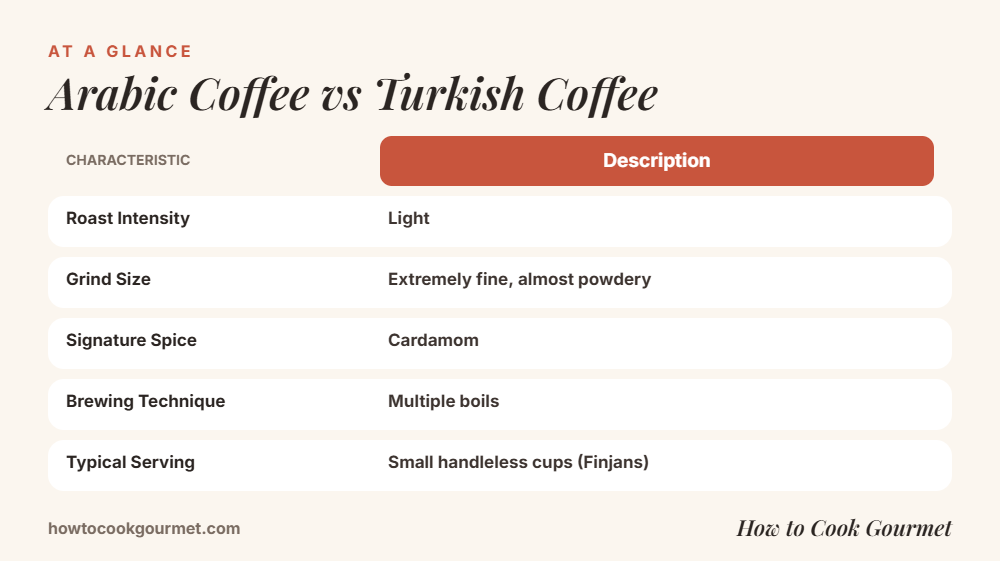
| Characteristic | Description |
|---|---|
| Roast Intensity | Light |
| Grind Size | Extremely fine, almost powdery |
| Signature Spice | Cardamom |
| Brewing Technique | Multiple boils |
| Typical Serving | Small handleless cups (Finjans) |
Ultimately, Arabic coffee embodies more than caffeine-it’s an immersive cultural ritual rich with tradition and nuanced flavors that invite you to savor every drop.
Turkish Coffee: Ceremony in Every Cup
Turkish coffee transcends mere drinking; it’s a multisensory ritual steeped in history, imbued with stories and communal bonding. Originating over 500 years ago, its preparation is as deliberate as it is enchanting.
One of the unique aspects of Turkish coffee is the fortune-telling practice, known as fal. When you finish your brew, the coffee grounds are swirled onto the cup’s interior, then the cup is inverted on the saucer. The shapes that emerge inspire mystical interpretations and friendly predictions-a captivating post-coffee tradition.
The presentation is just as ceremonial. Turkish coffee is brewed slowly in a special pot called a cezve or ibrik, ensuring a thick foam (crema) forms atop the cup-symbolizing skill and respect. Serving the brew with a small glass of water and a sweet treat, such as lokum (Turkish delight), enhances the ritualistic enjoyment.
Tradition-Bound Accompaniments
- A palate-cleansing glass of cold water
- Sweet morsels like Turkish delight or baklava
- Long, leisurely conversations among friends and family
For those who appreciate the art of patience and ceremony, Turkish coffee offers an unforgettable tasting experience where every sip is steeped in conviviality and cultural splendor.
Professional Brewing Tips: Brewing Like an Artisan
Elevate your coffee-making ritual with these expert tips tailored for both Arabic and Turkish coffee lovers. Precision is key-so pay attention to grind, water temperature, and technique.
Grinding Matters
A fine grind is essential but be cautious: overly powdered grounds might introduce bitterness and sediment, whereas overly coarse grounds yield a lackluster, weak brew. Aim for a consistency reminiscent of fine sand.
Optimal Water Temperature
Contrary to popular belief, boiling water should be avoided as it scorches the coffee, compromising flavor. Ideally, heat your water to around 93°C (just below boiling) to preserve delicate aromatics.
The Art of Foam in Turkish Coffee
The hallmark foam topping the cup is a prized feature. To achieve it, combine cold water, finely-ground coffee, and sugar (optional) in your cezve, then heat gradually while stirring gently. Avoid haste to protect the foam’s integrity.
Coffee-to-Water Ratio
| Ingredient | Measurement |
|---|---|
| Coffee | 1 heaping teaspoon |
| Water | 90 ml (3 ounces) |
Brew Summary Checklist
- Use a finely ground, sand-like coffee texture
- Heat water to just under boiling (93°C / 200°F)
- Stir only before heating; avoid stirring once foam forms
- Respect proper coffee-to-water ratios
- Serve immediately to preserve foam quality
Have personal pro tips? We’d love to hear from you and refine this craft together!
Choosing Your Ideal Coffee Experience
Deciding between Arabic and Turkish coffee ultimately hinges on the sensory and cultural experience you desire. Are you drawn to aromatic warmth with subtle spices or a rich, potent brew that challenges your palate?
Arabic coffee generally features light roasting and cardamom infusion, resulting in a subtly sweet and floral cup that invites slow enjoyment. It’s perfect for serene moments or welcoming guests.
Turkish coffee offers a dense, robust brew crafted by ultra-fine grinding and direct boiling, often sweetened during preparation. The thick texture and intense flavor suit those craving a bold caffeine kick paired with engaging rituals.
A Quick Comparison:
- Arabic Coffee: Light roast, cardamom-spiced, gentle boiling, aromatic and floral
- Turkish Coffee: Darker roast, fine powder grind, boiled in cezve, thicker and more intense
Whether you prefer the subtle elegance of Arabic coffee’s spice or the theatrical vigor of Turkish coffee preparation, both offer distinct pleasures woven into rich cultural tapestries.
Frequently Asked Questions
- What is the fundamental difference between Arabic and Turkish coffee?
- Arabic coffee is lightly roasted, infused with cardamom, and served in small handleless cups with a smooth, elegant flavor. Turkish coffee is characterized by its very fine grind, thicker consistency, and the presence of grounds in the cup, accompanied often by sweet treats.
- How are these coffees prepared?
- Arabic coffee involves boiling lightly roasted beans with spices such as cardamom multiple times. Turkish coffee is made by slowly boiling very finely ground dark roasted beans in a special pot called a cezve until a signature foam forms.
- How do their tastes differ?
- Arabic coffee tastes light, spiced, and floral mainly due to cardamom, whereas Turkish coffee is bold, sometimes slightly bitter, and intensely rich. Your preference for flavor intensity will guide your choice.
- Are the serving rituals distinctive?
- Yes-Arabic coffee is served in small finjans often alongside dates, and Turkish coffee is poured into small cups with grounds remaining, accompanied by water and sweets to cleanse the palate.
- Can I drink these coffees anytime?
- Absolutely! Both are staple beverages for socializing, celebrations, and relaxation, cherished for the immersive cultural experiences they foster.
- What type of coffee beans are best?
- Arabic coffee favors lightly roasted beans, sometimes greenish, while Turkish coffee employs finely ground dark roasted beans, each imparting unique flavor signatures.
- Which coffee is simpler to prepare at home?
- Turkish coffee is usually easier with a cezve, as it requires minimal spices and straightforward technique. Arabic coffee needs careful spice blending and repeated boiling, making the process a bit more intricate.
- Why should I care about the differences?
- Understanding these variations enriches your coffee experience by connecting you to the art, history, and tradition behind each cup, enhancing both enjoyment and appreciation.
Final Thoughts
Our journey through the realms of Arabic and Turkish coffee reveals two remarkably different yet equally enchanting traditions. While Arabic coffee charms with its light roast and aromatic cardamom essence, Turkish coffee captivates with its bold, intense flavor and cultural pageantry.
Whether you fall for the gentle allure of Arabic coffee or the robust drama of Turkish coffee, both promise meaningful rituals and delightful flavors. Next time you gather with friends, impress them by sharing these insights-let your coffee moments become rich adventures.
At How To Cook Gourmet, we cherish coffee as more than a beverage-it’s a gateway to global culture, history, and craftsmanship. Ready to brew your next masterpiece? Let’s dive in!
Keep reading:




Leave a Comment
You must be logged in to post a comment.