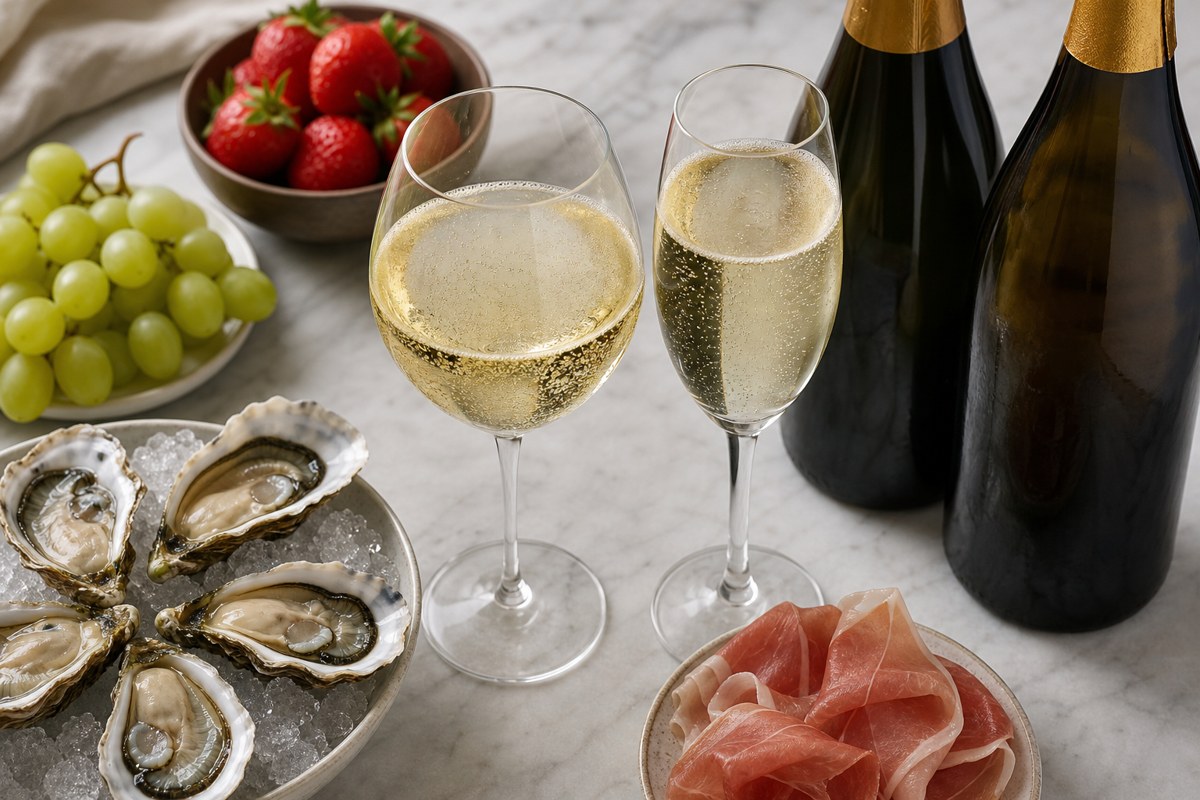
Quick answer: No, they are not the same. Champagne is a sparkling wine made only in France’s Champagne region with a second fermentation in the bottle, which gives it fine bubbles and toasty, bready notes. Prosecco comes from northeastern Italy, is fermented in large tanks and tastes lighter and fruitier, and it usually costs much less. You can swap one for the other in most cocktails and recipes.
New Year’s Eve is the biggest night of the year for bubbly, and the two bottles most people reach for are Champagne and Prosecco. They look alike in the glass and both pop with a satisfying fizz, so it’s easy to assume they’re interchangeable.
The real differences come down to where they’re made, which grapes go in, and how the bubbles get there. Those details change the flavor, the texture of the fizz and the price tag. Here’s how they compare, and when each one is the better pour.
Champagne vs Prosecco at a Glance
| Champagne | Prosecco | |
|---|---|---|
| Where it’s from | The Champagne region of northeastern France only | Northeastern Italy (Veneto and Friuli Venezia Giulia) |
| Main grapes | Chardonnay, Pinot Noir and Pinot Meunier | Glera (at least 85% of the blend) |
| How the bubbles form | Second fermentation inside each bottle (traditional method) | Second fermentation in large pressurized tanks (tank or Charmat method) |
| Flavor | Dry, crisp and complex: citrus, apple, toast, brioche, almond | Light and fruity: green apple, pear, melon, white flowers |
| Bubbles | Fine, tight and long-lasting | Larger, frothier and softer |
| Typical price | Higher, often several times the cost of Prosecco | Budget-friendly |
| Best uses | Toasts, oysters, fried foods, rich dishes, Kir Royale, French 75 | Spritzes, Bellinis, mimosas, brunch, antipasti |
| Substitute ratio | 1:1 for Prosecco in most cocktails and recipes | 1:1 for Champagne in most cocktails and recipes |
What Is Champagne?
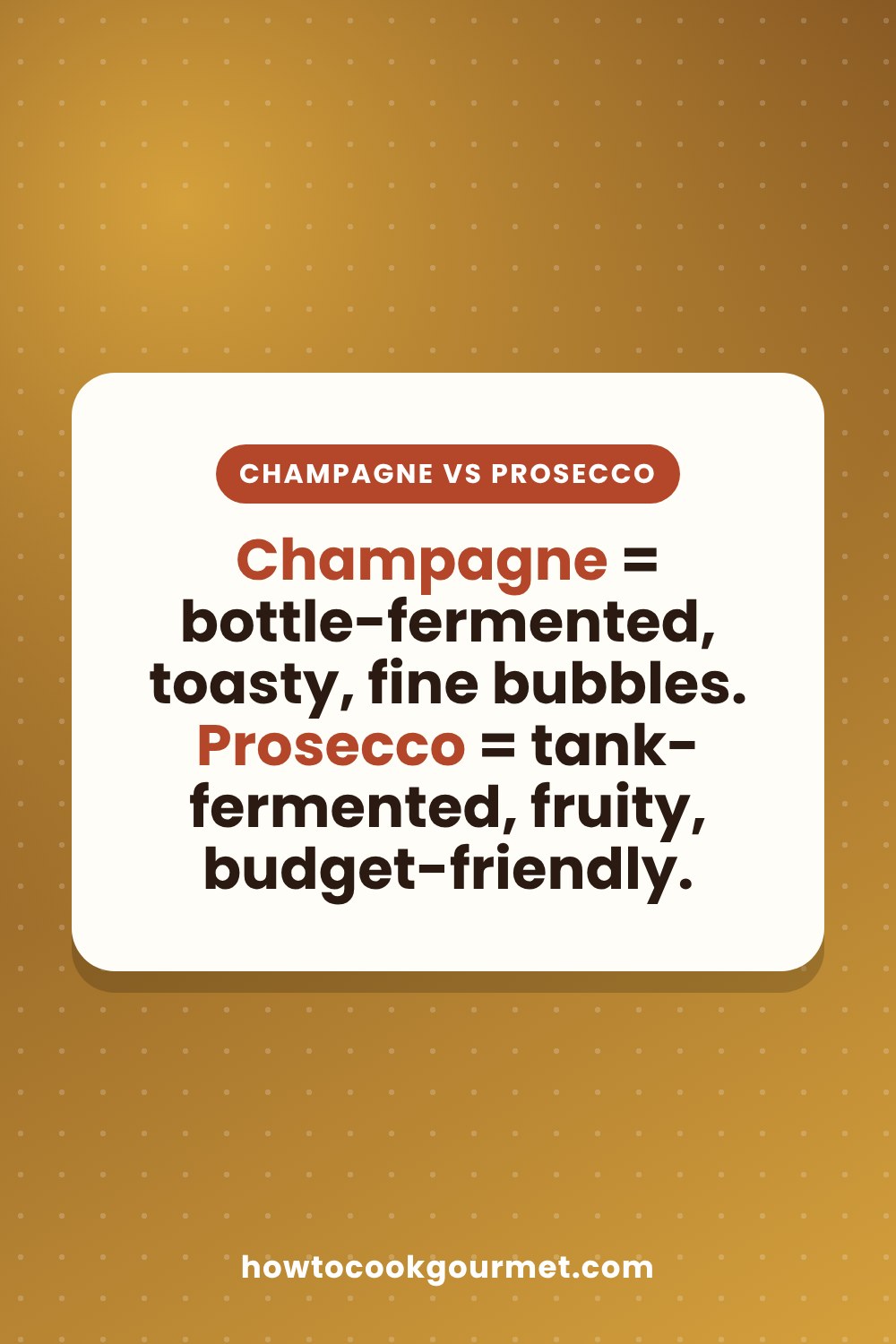
Champagne is sparkling wine from the Champagne region of France, and the name is legally protected. A sparkling wine made anywhere else, even with the same grapes and methods, can’t be labeled Champagne. Most Champagne is a blend of Chardonnay, Pinot Noir and Pinot Meunier.
The bubbles come from the traditional method (méthode champenoise). Winemakers first make a still base wine, then bottle it with a little sugar and yeast so a second fermentation happens inside the sealed bottle. The carbon dioxide has nowhere to go, so it dissolves into the wine.
The wine then rests on the spent yeast, called lees, for at least 15 months for non-vintage Champagne and at least three years for vintage bottles. That aging is where Champagne gets its signature toasty, bready, brioche-like notes and its fine, persistent bubbles. It’s also a big reason it costs more: the process is slow and labor-intensive.
Most Champagne you’ll see is labeled Brut, which means dry. Blanc de Blancs is made only from white grapes (Chardonnay) and tends to be crisp and elegant, while Blanc de Noirs comes from the dark-skinned Pinot grapes and is often fuller-bodied.

What Is Prosecco?
Prosecco is an Italian sparkling wine from the northeast of the country, mainly the Veneto and Friuli Venezia Giulia regions. It’s made mostly from the Glera grape, which has a naturally fruity, floral character.
Instead of fermenting in each bottle, Prosecco gets its bubbles from the tank method, also called the Charmat or Martinotti method. The second fermentation happens in large pressurized steel tanks, and the wine is bottled soon after. Skipping long aging keeps the focus on fresh fruit: think green apple, pear, honeydew and white flowers. A tulip-shaped glass shows off those aromas better than a narrow flute.
The bubbles tend to be bigger and frothier than Champagne’s, and the wine is usually lighter in body. Many Prosecco bottles are labeled Extra Dry, which is confusingly a touch sweeter than Brut. For the highest-quality bottles, look for Prosecco Superiore DOCG from the Conegliano Valdobbiadene hills.
Because the tank method is faster and less expensive, Prosecco typically costs a fraction of what Champagne does, which makes it the go-to choice for mixing and for pouring a crowd.

Can You Substitute Champagne for Prosecco?
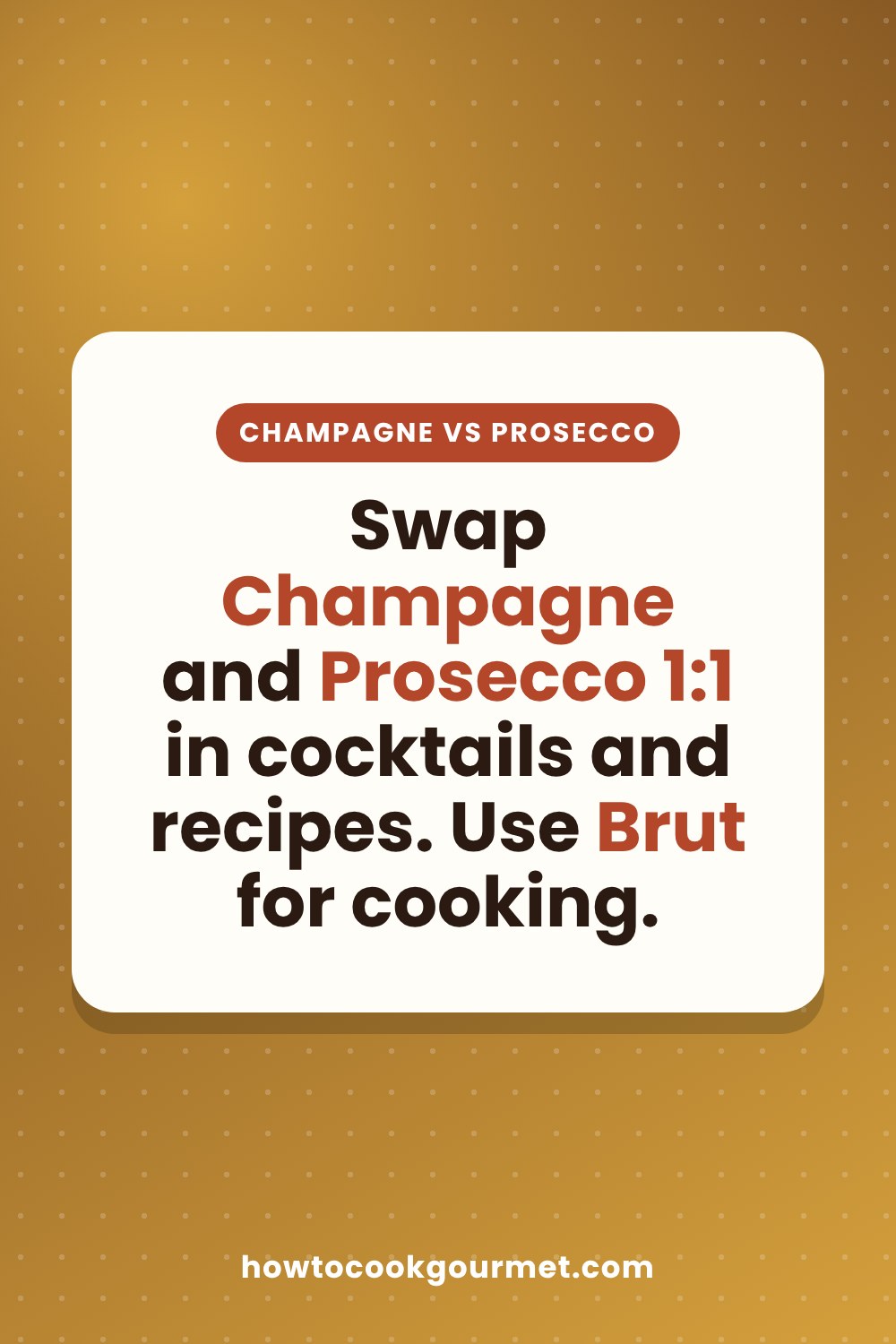
Yes. In cocktails, punches and recipes, you can swap Champagne and Prosecco 1:1. The drink will taste slightly different, but it won’t fail.
In cocktails, Prosecco makes a drink fruitier and a little softer, while Champagne makes it drier and crisper. Prosecco is the classic choice for an Aperol Spritz (a common ratio is 3 parts Prosecco, 2 parts Aperol, 1 part soda water) and the Bellini (Prosecco with white peach purée). Champagne is traditional in a Kir Royale and a French 75, but Prosecco works fine in both.
In cooking, the bubbles disappear as soon as the wine heats up, so sparkling wine behaves much like a dry white wine. Use it 1:1 in risotto, pan sauces, beurre blanc or steamed mussels. If you’re reducing it, choose a Brut bottle, because the sweetness of an Extra Dry Prosecco becomes more noticeable as it concentrates.
If you want a Champagne-like flavor without the price, look for Cava from Spain or Crémant from other regions of France. Both use the traditional bottle-fermentation method, so they have finer bubbles and more toasty character than Prosecco.
When to Use Each
- Pour Champagne for the midnight toast, a milestone celebration, or when the wine is the star of the moment. A good Champagne glass helps you catch its toasty aromas.
- Pair Champagne with oysters, caviar, smoked salmon, fried chicken, potato chips and rich, creamy cheeses. Its acidity and fine bubbles cut through salt and fat.
- Choose Prosecco for cocktails and punches, where its fruitiness shines and the price difference adds up fast.
- Serve Prosecco at brunch, with mimosas and Bellinis, or alongside prosciutto, melon, antipasti and light appetizers.
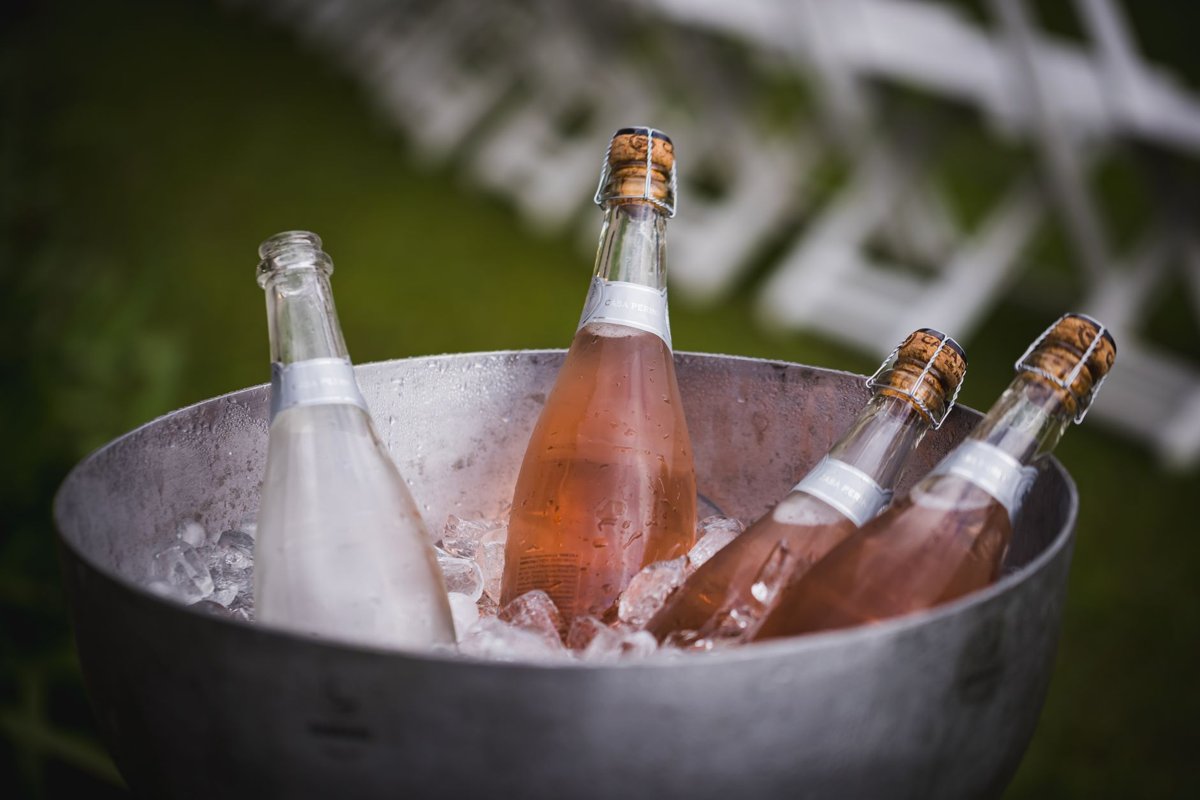
- Pick Prosecco when you’re pouring for a big group and want an easy-drinking, crowd-pleasing bottle. Keep a few bottles cold in an ice bucket on the table.
- Reach for a Brut bottle of either one when cooking, so the finished dish doesn’t taste sweet.
What You’ll Need for Serving Bubbly
- Riedel Veritas Champagne Glass, Set of 2: A tulip-shaped glass with a wider bowl than a classic flute, so you get more of the aroma from either Champagne or Prosecco.
- Champagne Bottle Stopper: Clamps onto the bottle lip to hold in pressure, so leftover bubbly stays fizzy in the fridge for a day or two.
- Stainless Steel Champagne Ice Bucket: A bucket of ice and water chills a bottle faster than the fridge and keeps it cold on the table all night.
Common Mistakes to Avoid
- Serving it warm. Both wines taste best well chilled, roughly 40°F to 50°F. Chill the bottle in the fridge for a few hours or in an ice-water bucket for about 20 to 30 minutes.
- Popping the cork loudly. A big pop wastes bubbles and can send the cork flying. Hold the cork, tilt the bottle at about 45 degrees and twist the bottle slowly so it releases with a gentle sigh.
- Pointing the bottle at anyone. The pressure inside is high, so always aim the cork away from people and breakable things.
- Buying Extra Dry when you want dry. Extra Dry is sweeter than Brut. If you prefer a crisp, dry wine, look for Brut or Extra Brut on the label.
- Pouring too fast. Tilt the glass and pour slowly, or pour a little, let the foam settle and then top it off, so it doesn’t overflow.
- Leaving an opened bottle uncovered. The bubbles fade within hours, so seal leftovers with a Champagne stopper and refrigerate them.
- Using pricey Champagne in a mixed drink. Once you add juice or liqueur, most of Champagne’s subtle aged character is lost, so save the good bottle for sipping.
Champagne vs Prosecco FAQ
Are Champagne and Prosecco the same thing?
No. Both are sparkling wines, but Champagne comes only from the Champagne region of France and is fermented a second time in the bottle, while Prosecco comes from northeastern Italy and is fermented in tanks. Champagne tastes drier and toastier with finer bubbles; Prosecco tastes lighter and fruitier.
Can I use Prosecco instead of Champagne in a mimosa or recipe?
Yes. Swap it 1:1. Prosecco makes a mimosa a little fruitier and is a smart choice since the orange juice covers Champagne’s subtler flavors. For cooking, choose a Brut Prosecco so reduced sauces don’t turn sweet.
Does Prosecco have more sugar than Champagne?
It depends on the label, not the wine type. Sweetness is labeled the same way for both: Brut is dry, Extra Dry is slightly sweeter, and Dry is sweeter still. Many Prosecco bottles are Extra Dry and many Champagnes are Brut, so Prosecco often tastes a bit sweeter. Calories in either come mostly from alcohol and residual sugar.
How long does Champagne or Prosecco last after opening?
Sealed with a sparkling wine stopper and kept in the fridge, an opened bottle usually stays pleasantly fizzy for about 1 to 3 days. Prosecco is meant to be enjoyed young, so drink unopened bottles within a year or two; store all sparkling wine somewhere cool and dark.
The Bottom Line
Champagne and Prosecco are both great bubbly, just built for different moments. Champagne’s bottle fermentation and long aging give it fine bubbles and toasty depth worth savoring at a big toast or with oysters and fried foods. Prosecco’s fresh, fruity style and friendlier price make it the easy pick for spritzes, mimosas and pouring a crowd. When a recipe or cocktail calls for one, the other will do the job 1:1, so pour whichever fits your night and your budget.
More from the kitchen:
- Cooking Food With Wine
- How To Make A Cheese Tray
- Serrano Ham vs Prosciutto
- The Big Difference Between Ice cream and Gelato
As an Amazon Associate, we earn from qualifying purchases. This post contains affiliate links.