Quick answer: No, they are not the same. Sweet potatoes and true yams are different plants from different families, but in most US supermarkets the vegetable labeled “yam” is really a soft, orange-fleshed sweet potato. You can swap those 1:1 in any recipe; a true yam is starchier and less sweet, so it works better in savory dishes.
Every November the same question shows up at the grocery store: the bin on the left says sweet potatoes, the bin on the right says yams, and they look almost identical. If you’re planning a Thanksgiving casserole or a tray of roasted wedges, it helps to know what you’re actually buying.
The short story is a labeling quirk that goes back decades. Below we break down what each one really is, how they taste and cook, when you can substitute one for the other, and the mistakes that turn a holiday side dish into a stringy, watery mess.
Sweet Potato vs Yam at a Glance
| Sweet Potato | True Yam | |
|---|---|---|
| What it is | Root of a vine in the morning glory family (Ipomoea batatas) | Tuber of a climbing plant in the Dioscorea family |
| Where it’s common | Every US supermarket, often sold as “yams” | International, African, Caribbean and Asian markets |
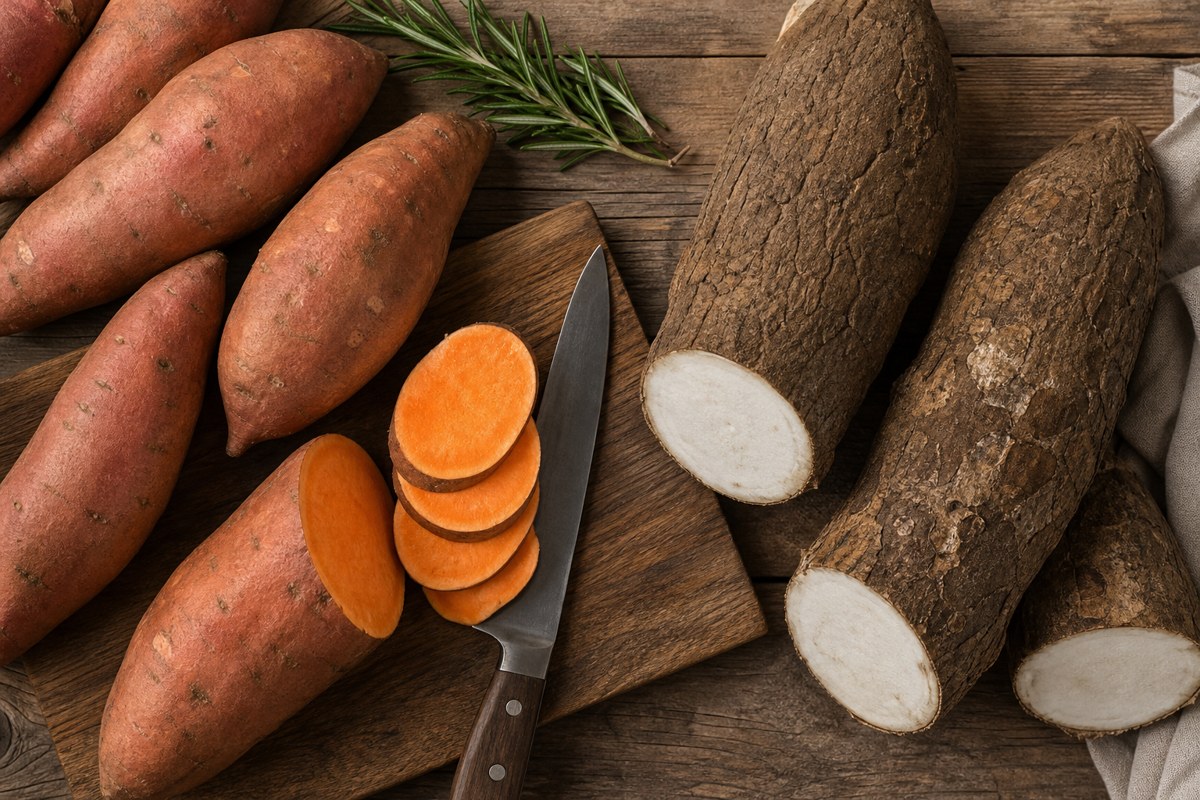
| Skin | Thin, smooth, copper, red, tan or purple | Thick, rough and bark-like; brown or black |
| Flesh and flavor | Orange, white or purple; noticeably sweet | White, ivory, yellow or purple; mild, earthy, starchy |
| Texture when cooked | Moist and creamy (orange types) or drier and fluffy (white types) | Dry, dense and starchy, closer to a russet potato |
| Best uses | Roasting, mashing, casseroles, pies, fries | Boiling, pounding, stews, frying, savory mashes |
| Nutrition note | Orange varieties are rich in beta-carotene (vitamin A) | Mostly starch; much less beta-carotene in white-fleshed types |
| Substitute ratio | 1:1 for store “yams” | 1:1 by weight; add extra liquid or fat |
What Is a Sweet Potato?
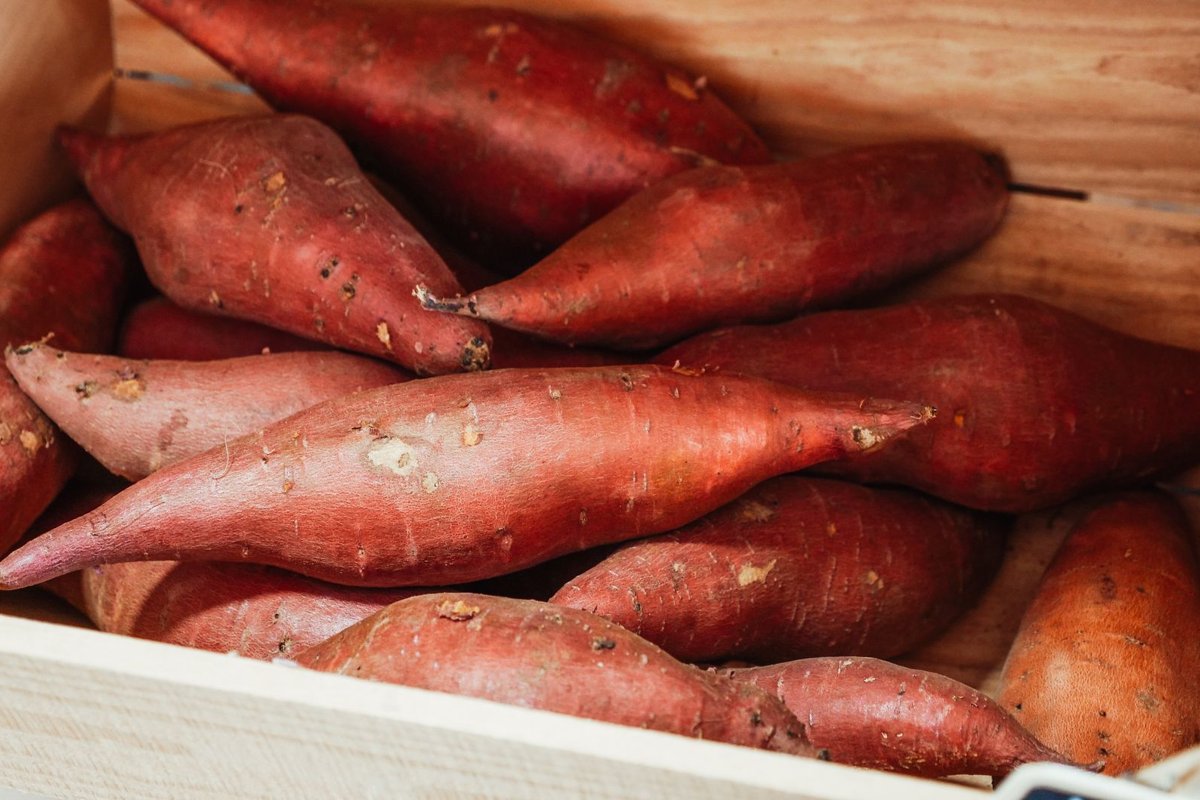
A sweet potato is the starchy root of a vine native to the tropical Americas. Despite the name, it isn’t closely related to the regular potato. It comes in two broad styles: firm varieties with pale or white flesh that cook up dry and fluffy, and soft varieties with deep orange flesh that turn moist, creamy and very sweet. Popular soft types include Beauregard, Garnet and Jewel.
Decades ago, growers in the American South started calling the soft orange kind “yams” to set it apart from the firm, pale sweet potatoes shoppers already knew. The name stuck. Today the USDA requires produce labeled “yam” to also carry the term “sweet potato”, and canned “yams” in syrup are sweet potatoes too.
Sweet potatoes roast beautifully because their natural sugars caramelize at high heat. Whole ones typically take 45 to 60 minutes at 400 to 425°F, while 1-inch cubes take about 25 to 35 minutes on a rimmed sheet pan.
What Is a Yam?
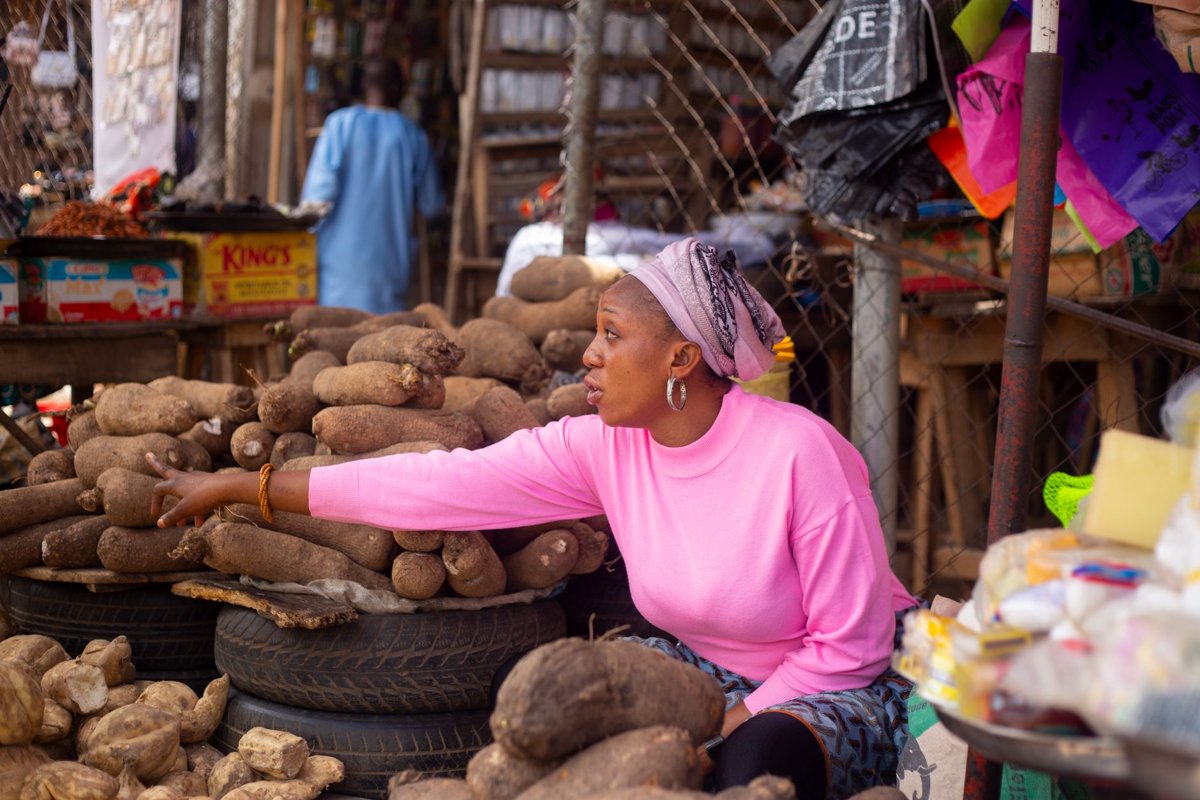
A true yam is a tuber from the Dioscorea genus, a staple crop across West Africa, the Caribbean and parts of Asia. Yams can grow very large, and their skin is rough, scaly and almost bark-like. Inside, the flesh is usually white or ivory, though purple yams such as Filipino ube are also true yams.
Compared with a sweet potato, a true yam is drier, starchier and far less sweet. It behaves more like a russet potato in the pot, which is why it’s often boiled, fried, added to stews, or pounded into dishes like West African fufu.
True yams should always be cooked before eating, never eaten raw. Some people also find that raw yam skin irritates their hands, so many cooks wear gloves while peeling with a sturdy vegetable peeler. Look for them in international or specialty grocery stores rather than the regular produce aisle.
Can You Substitute Sweet Potato for Yam?
- Store “yams” and orange sweet potatoes: swap freely at 1:1. They are the same vegetable, so any recipe calling for one works with the other.
- True yam in place of sweet potato: use the same weight, but expect a less sweet, starchier result. Add a little extra butter, cream or broth to mashes (a hand potato masher keeps them fluffier than a blender), and taste for sweetness in casseroles.
- Sweet potato in place of true yam: works in stews and boiled dishes, but cook it a few minutes less since it softens faster. It won’t hold together for pounded dishes like fufu.
- Canned “yams”: these are cooked sweet potatoes, often in syrup. Drain them well, cut back on added sugar, and shorten the bake time since they only need to heat through.
- Firm white sweet potatoes: a good middle ground if you want less sweetness. They swap 1:1 for orange sweet potatoes but bake up drier, so a splash more liquid helps.
When to Use Each
- Thanksgiving casserole or pie: reach for orange sweet potatoes (the ones often labeled yams). Their moisture and sweetness are what these recipes are built around.
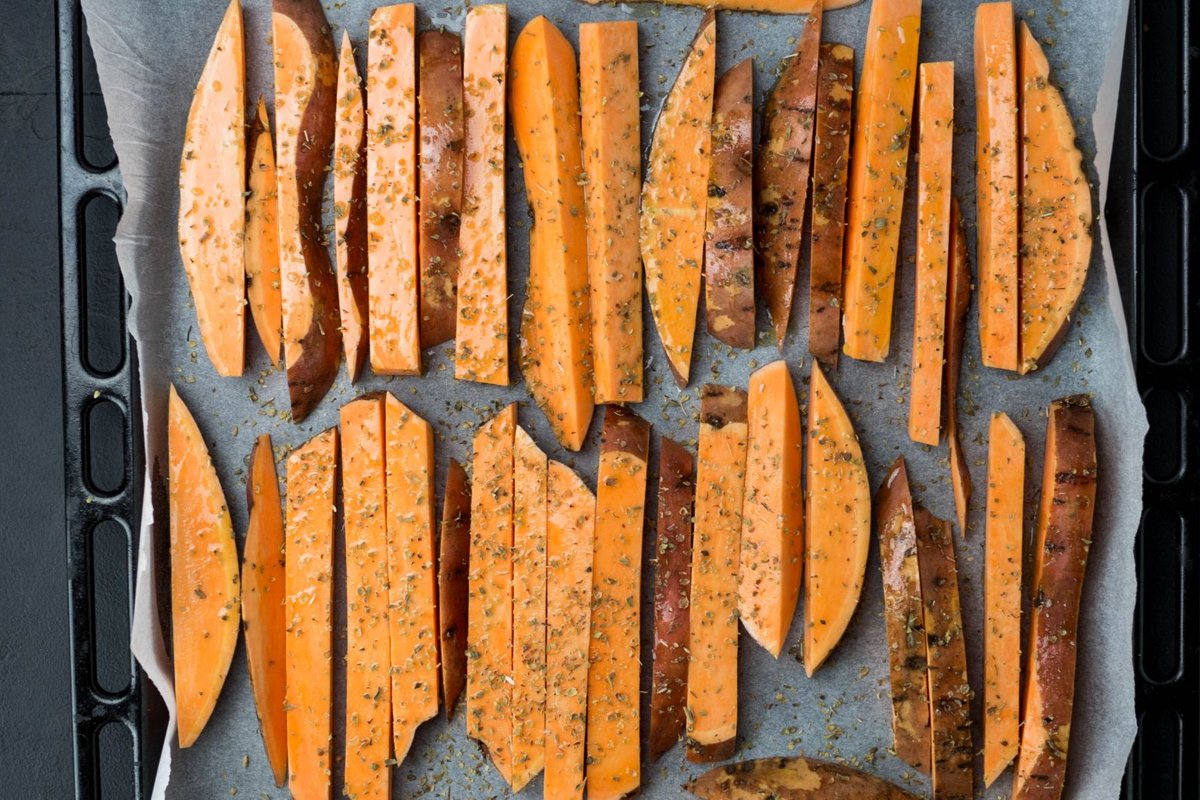
- Roasted wedges or sheet-pan sides: orange sweet potatoes caramelize at the edges; firm white sweet potatoes give a crisper, less sugary bite.
- Fries: sweet potatoes work well, but soak and dry the cut pieces and don’t crowd the pan, since their sugars brown quickly.
- Hearty stews and soups: true yams keep their shape and thicken the broth with their starch.
- Boiled, fried or pounded dishes from African and Caribbean cooking: use true yams; sweet potatoes are too soft and sweet for the classic texture.
- Baked whole as a simple side: any sweet potato. Prick the skin, roast until a knife slides in easily, and finish with butter and salt.
What You’ll Need
- OXO Good Grips Swivel Vegetable Peeler: A sharp swivel blade makes quick work of sweet potato skins and the tougher outer layer of true yams.
- OXO Good Grips Stainless Steel Potato Masher: Handles a big batch of mashed sweet potatoes or yams without turning them gluey the way an electric mixer can.
- Nordic Ware Naturals Half Sheet Pans (2-Pack): Sturdy aluminum pans with enough room to roast cubes in a single layer, so they brown instead of steam.
Common Mistakes to Avoid
- Buying the wrong vegetable for the recipe: if a Southern casserole calls for yams, it means orange sweet potatoes, not the rough-skinned tubers from the international aisle.
- Crowding the pan: piled-up cubes steam and go soft. Spread them out and use two sheet pans if needed.
- Boiling for mash when you could roast: boiling waters down the flavor. Roasting whole sweet potatoes first gives a sweeter, richer mash; scoop out the flesh and work it with a potato masher.
- Storing raw sweet potatoes in the fridge: cold can give them a hard core and off flavor. Keep them in a cool, dark, dry spot and use within a few weeks.
- Eating true yams undercooked: always cook yams through until tender before serving.
- Over-sweetening canned yams: they’re often packed in syrup already, so taste before adding brown sugar or marshmallows.
Sweet Potato Vs Yam FAQ
Are sweet potatoes and yams the same?
No. They are different plants from different botanical families. However, most vegetables sold as “yams” in US supermarkets are actually orange-fleshed sweet potatoes, so in everyday American cooking the two words usually mean the same thing.
Can I use sweet potatoes instead of yams in a recipe?
Yes. If the recipe is American and calls for yams, it almost certainly means orange sweet potatoes, so swap 1:1. If it’s an African or Caribbean recipe calling for true yams, sweet potatoes will work in a pinch but will be softer and sweeter.
Which is more nutritious, a sweet potato or a yam?
Both are good sources of fiber and potassium. Orange sweet potatoes stand out for beta-carotene, which the body converts to vitamin A, while true yams are starchier and generally contain much less beta-carotene.
How should I store sweet potatoes and yams?
Keep both whole and unwashed in a cool, dark, well-ventilated place, not the refrigerator. Once cooked, refrigerate leftovers in a covered container and use them within 3 to 4 days.
The Bottom Line
In the US, the “yams” in your casserole are really orange sweet potatoes, so buy whichever bin is fresher and swap them 1:1 without a second thought. True yams are a different, starchier tuber that shines in stews and savory dishes. Pick the soft, sweet orange kind for holiday sides and pies, and save real yams for recipes that call for their dense, earthy texture.
More from the kitchen:
- Brown Sugar Glazed Carrots
- How To Cook A Turkey And Gravy
- Wet Brine vs Dry Brine: Which Makes the Juiciest Turkey?
- Couscous vs Quinoa: Are They the Same? Nutrition, Taste and Cooking Compared
As an Amazon Associate, we earn from qualifying purchases. This post contains affiliate links.