
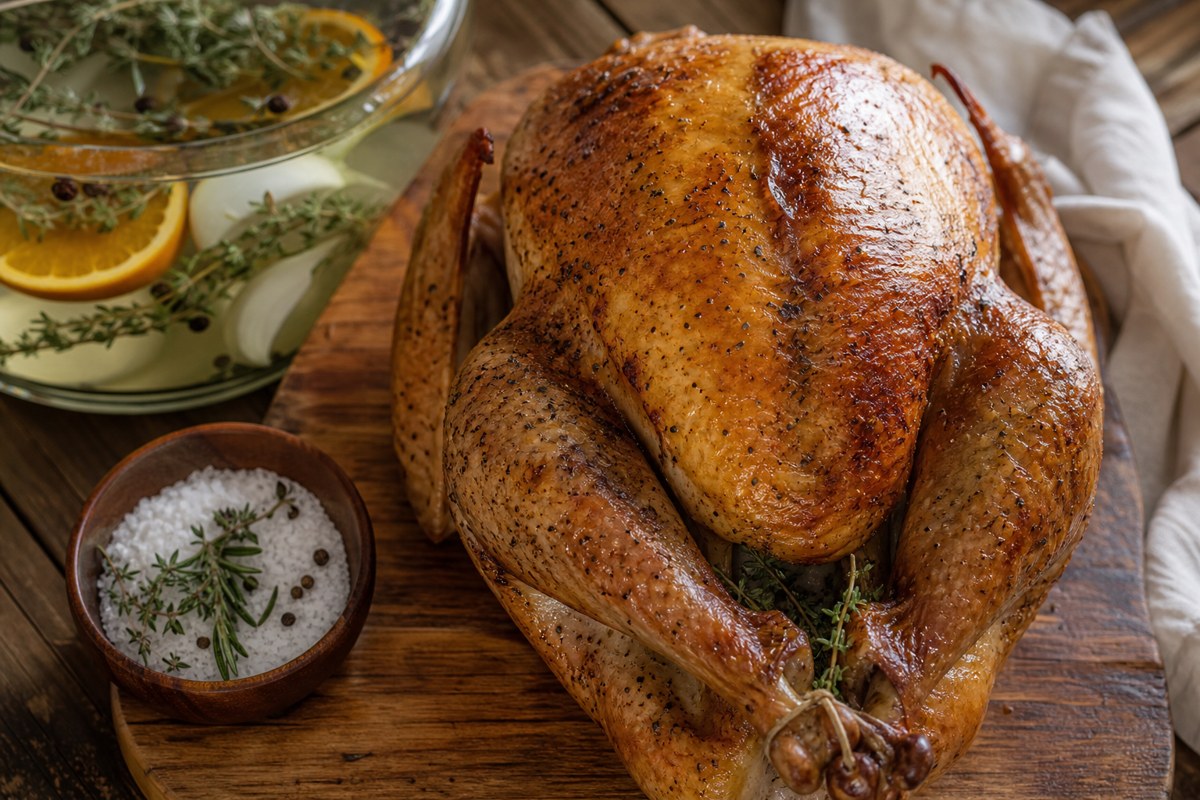
Quick answer: Both methods season the turkey and help it stay juicy, but most home cooks get better results with a dry brine. It gives crispier skin and more concentrated turkey flavor, and it doesn’t need a bucket or extra fridge space. A wet brine adds a bit more moisture, but it can water down the flavor and make the skin harder to crisp.
Brining is the easiest insurance policy against a dry Thanksgiving turkey. Both methods rely on salt, which seasons the meat deeply and changes its proteins so they hold onto more moisture as the bird roasts.
The difference is how the salt gets there. A wet brine soaks the turkey in salt water, while a dry brine rubs salt straight onto the skin and meat. Here’s how they compare, side by side.
Wet Brine vs Dry Brine at a Glance
| Wet brine | Dry brine | |
|---|---|---|
| How it works | Turkey soaks in salted water (often with sugar, herbs and aromatics) | Salt (plus optional herbs and spices) is rubbed onto the skin and under it |
| Typical time | 12 to 24 hours | 1 to 3 days |
| Space needed | A food-safe bucket, cooler or brining bag that fits the whole bird | Just a sheet pan or roasting pan in the fridge |
| Skin | Softer, harder to crisp | Drier surface, so it browns and crisps well |
| Flavor | Juicy, but slightly diluted turkey flavor | Concentrated, well-seasoned turkey flavor |
| Mess | Gallons of raw-poultry water to handle and dump | Minimal |
| Best for | Lean birds when you want maximum moisture | Crisp skin, small fridges and easier prep |
How Wet Brining Works
In a wet brine, the turkey is fully submerged in a salt solution, typically around 1/2 cup of table salt or 1 cup of Diamond Crystal kosher salt per gallon of water. Many cooks add sugar, citrus, garlic and herbs.
The turkey absorbs some of that salty water, so it weighs more and tastes juicier when carved. The trade-off is that part of that juiciness is just water, which can dilute the natural turkey flavor. The wet skin is also harder to crisp unless you dry it thoroughly before roasting.
Wet brining also takes planning. The bird has to stay below 40°F the whole time, which means a fridge with a lot of free space or a cooler you keep refilling with ice.
How Dry Brining Works
A dry brine is simply salt rubbed onto the turkey a day or more before cooking. A common guideline is about 1 tablespoon of Diamond Crystal kosher salt per 4 to 5 pounds of turkey. Use roughly half as much if you’re using Morton kosher or table salt, which are denser.
At first the salt pulls moisture out of the meat. That moisture dissolves the salt into a natural brine, which is then reabsorbed deep into the meat. Leaving the bird uncovered in the fridge also dries the skin, which is the secret to a crackly, golden finish.
How to Dry Brine a Turkey, Step by Step
- Make sure the turkey is fully thawed, then remove the neck and giblets and pat it dry with paper towels.
- Measure your salt (about 1 tablespoon of Diamond Crystal kosher salt per 4 to 5 pounds) and mix in herbs, pepper or citrus zest if you like.
- Sprinkle the salt evenly over the whole bird, including the cavity, and work some under the breast and thigh skin.
- Set the turkey on a rack in a roasting pan and refrigerate it uncovered for 1 to 3 days.
- Don’t rinse it before roasting. Just pat away any surface moisture and cook as usual, skipping any extra salt in your rub.
What You’ll Need to Dry Brine a Turkey
- Diamond Crystal Kosher Salt: The coarse, light kosher salt most dry-brine measurements are based on, so it’s hard to oversalt.
- Fire & Flavor Turkey Brining Bag: If you go the wet-brine route, a heavy-duty zip bag holds a 25-pound bird and saves fridge space versus a bucket.
- E-far Stainless Steel Roasting Pan with Rack: A rack lets air reach the whole bird while it dry brines uncovered in the fridge, then goes straight into the oven.
- ThermoPro TP15 Instant-Read Meat Thermometer: Brined turkey cooks a little faster, so check the thickest part of the thigh instead of trusting the clock.
Which Should You Choose?
- Choose a dry brine if you want crispy skin, have limited fridge space, or want the least mess.
- Choose a wet brine if you’re cooking a very lean bird or smoking a turkey and want the maximum possible moisture.
- Skip brining entirely if your turkey is labeled self-basting, enhanced, pre-brined or kosher, because it’s already been salted.
Common Brining Mistakes to Avoid
- Brining a self-basting, enhanced or kosher turkey, which leads to an overly salty bird.
- Using the same amount of table salt as kosher salt. Table salt is much denser, so it’s easy to oversalt.
- Letting a wet-brining turkey sit above 40°F, which is a food safety risk.
- Adding salt to your butter or rub after brining, which makes the meat and drippings too salty.
- Making gravy from wet-brined drippings without tasting first. Drippings can be salty, so season gravy last.
Wet Brine Vs Dry Brine FAQ
Is dry brining better than wet brining?
For most home cooks, yes. Dry brining gives crispier skin and more concentrated flavor with less mess. Wet brining adds slightly more moisture, but it can dilute flavor and makes crisp skin harder.
Can you dry brine a frozen turkey?
Thaw it first. Salt can’t penetrate frozen meat evenly, so start the dry brine once the turkey is fully thawed in the fridge.
Do you rinse a turkey after dry brining?
No. Rinsing spreads raw poultry juices around your sink and wets the skin you worked to dry. Just pat it dry and roast.
Can you brine a kosher or self-basting turkey?
No. Those turkeys have already been salted or injected with a salt solution, so brining them again will make them too salty.
The Bottom Line
Both brines beat no brine at all, but a dry brine is the easier and more reliable choice for most kitchens. Start it one to three days before Thanksgiving and you’ll get a well-seasoned, juicy turkey with skin worth fighting over.
More from the kitchen:
As an Amazon Associate, we earn from qualifying purchases. This post contains affiliate links.